A special set of Australian fish fossils just derailed evolution’s long-held story of early fish origins. The remarkable fossils preserved detailed soft tissue body features, including the precise points where muscles attached to the ancient fish’s bones. These clues enabled paleontologists to reconstruct the now-extinct fish anatomy. Though expecting something much more primitive-looking, they discovered completely designed, fully-muscled armored fish. Now they have to rewrite the evolutionary bit about how jaws evolved.1
This interesting article may be seen in its entirety HERE.
cr
Note (6/18/2016): I had a story here that was removed from the original source so I went on a hunt to find the same related story and others. The one that was here originally is first. There are many more than three like it, but I will list two other similar stories that show the general view of current scientists within American Universities over the past decade or so.
Mommy, “I always wanted to be a fireman when I grew up.”
Mom smiled back and said, “Let’s see if we can
make your wish come true.”
Later that day she went to her local fire
department in Phoenix, Arizona, where she met
Fireman Bob, who had a heart as big as Phoenix.
She explained her son’s final wish and asked if
it might be possible to give her six-year-old son
a ride around the block on a fire engine.
Fireman Bob said, “Look, we can do better than
that. If you’ll have your son ready at seven
o’clock Wednesday morning, we’ll make him an
honorary fireman for the whole day. He can come
down to the fire station, eat with us, go out on
all the fire calls, the whole nine yards! And if
you’ll give us ! his sizes, we’ll get a real fire
uniform for him, with a real fire hat-not a toy
one-with the emblem of the Phoenix Fire
Department on it, a yellow slicker like we wear
and rubber boots. They’re all manufactured right
here in Phoenix, so we can get them fast.”
Three days later Fireman Bob picked up Billy,
dressed him in his fire uniform and escorted him
from his hospital bed to the waiting hook and
ladder truck. Billy got to sit on the back of the
truck and help steer it back to the fire station.
He was in heaven. There were three fire calls in
Phoenix that day and Billy got to go out on all
three calls. He rode in the different fire
engines, the paramedic’s van, and even the fire chief’s car.
He was also videotaped for the local news
program. Having his dream come true, with all the
love and attention that was lavished upon him, so
deeply touched Billy that he lived three months
longer than any doctor thought possible.
One night all of his vital signs began to drop
dramatically and the head nurse, who believed in
the hospice concept that no one should die alone,
began to call the family members to the hospital.
Then she remembered the day Billy had spent as a
fireman, so she called the Fire Chief and asked
if it would be possible to send a fireman in
uniform to the hospital to be with Billy as he
made his transition.
The chief replied, “We can do better than that.
We’ll be there in five minutes.
Will you please do me a favor?
When you hear the sirens screaming and see the
lights flashing, will you announce over the PA
system that there is not a fire? It’s just the
fire department coming to see one of its finest
members one more time.
And will you open the window to his room?
About five minutes later a hook and ladder truck
arrived at the hospital and extended its ladder
up to Billy’s third floor open window
16 firefighters climbed up the ladder into
Billy’s room.
With his mother’s permission, they
hugged him and held him and told him how much
they loved him.
With his dying breath, Billy
looked up at the fire chief and said,
“Chief, am I really a fireman now?”
“Billy, you are, and the Head Chief, Jesus, is holding your hand,”
the chief said.
With those words, Billy smiled and said,
“I know, He’s been holding my hand all day,
and the angels have been singing..”
He closed his eyes one last time.
————————————–
This story fits the “Demonstrations of the fruits of the Spirit” class that is at the top of the list of stories for which I am looking. The first fruit of the spirit is love. I thought this was a good example of love.
I am not trying to sell books here. But, I think this is an interesting video.
There is no question that Satan is alive and and actively trying to turn lives into chaos. I haven’t posted much of Gary lately because of the prophecy conference that was recently sponsored by Prophecy in the News. Several of the lecturers there were folks that are too on the fringe for me.
This is not a topic that I wish to discuss, but I think it is necessary in the day we live in to be familiar with some “dark side” events. The verses of Ephesians 6 are important for our time:
The Armor of God
10 Finally, be strong in the Lord and in the strength of His might. 11 Put on the full armor of God, so that you will be able to stand firm against the schemes of the devil. 12 For our struggle is not against flesh and blood, but against the rulers, against the powers, against the world forces of this darkness, against the spiritual forces of wickedness in the heavenly places. 13 Therefore, take up the full armor of God, so that you will be able to resist in the evil day, and having done everything, to stand firm. 14 Stand firm therefore, having girded your loins with truth, and having put on the breastplate of righteousness, 15 and having shod your feet with the preparation of the gospel of peace; 16 in addition to all, taking up the shield of faith with which you will be able to extinguish all the flaming arrows of the evil one. 17 And take the helmet of salvation, and the sword of the Spirit, which is the word of God.
A question is raised in the video: “Are we ready for what may happen in the near future?” This question is not raised to frighten. It is clear in the discussion that Christians have nothing to fear. However, I think we could all be a bit better prepared for what may happen shortly.
The following story is fictional. The reason I have posted it is to illustrate that today’s churches are not nearly sensitive enough to the needs of the poor and others.
CR
—————————————–
Pastor Jeremiah Steepek transformed himself into a homeless person and went to the 10,000 member church that he was to be introduced as the head pastor at that morning. He walked around his soon to be church for 30 minutes while it was fill…ing with people for service, only 3 people out of the 7-10,000 people said hello to him. He asked people for change to buy food – NO ONE in the church gave him change. He went into the sanctuary to sit down in the front of the church and was asked by the ushers if he would please sit n the back. He greeted people to be greeted back with stares and dirty looks, with people looking down on him and judging him.As he sat in the back of the church, he listened to the church announcements and such. When all that was done, the elders went up and were excited to introduce the new pastor of the church to the congregation. “We would like to introduce to you Pastor Jeremiah Steepek.” The congregation looked around clapping with joy and anticipation. The homeless man sitting in the back stood up and started walking down the aisle. The clapping stopped with ALL eyes on him. He walked up the altar and took the microphone from the elders (who were in on this) and paused for a moment then he recited,
“Then the King will say to those on his right, ‘Come, you who are blessed by my Father; take your inheritance, the kingdom prepared for you since the creation of the world. For I was hungry and you gave me something to eat, I was thirsty and you gave me something to drink, I was a stranger and you invited me in, I needed clothes and you clothed me, I was sick and you looked after me, I was in prison and you came to visit me.’ “Then the righteous will answer him, ‘Lord, when did we see you hungry and feed you, or thirsty and give you something to drink? When did we see you a stranger and invite you in, or needing clothes and clothe you? When did we see you sick or in prison and go to visit you?’
‘The King will reply, ‘Truly I tell you, whatever you did for one of the least of these brothers and sisters of mine, you did for me.’
After he recited this, he looked towards the congregation and told them all what he had experienced that morning. Many began to cry and many heads were bowed in shame. He then said, “Today I see a gathering of people, not a church of Jesus Christ. The world has enough people, but not enough disciples. When will YOU decide to become disciples?”
He then dismissed service until next week.
Being a Christian is more than something you claim. It’s something you live by and share with others.
======================================
I would like to thank Chris Henry, a former student of mine, for sharing this with his Facebook friends. Unfortunately, I think the majority of “Christian” churches in America would do the same.
A VERY INTERESTING ARTICLE was recently published by the folks at the Institute for Creation Research. It shows a picture of a dinosaur that was carved around 1,000 years ago.
It is a short article, but it packs a punch. Here are a few excerpts:
“The temple at Ta Prohm (modern day Cambodia) —with its tree root-draped stones providing a picturesque scene for visitors—lies fewer than three miles from the oft-visited major Angkor Wat complex. The Khmer people built it and the many surrounding temples during Europe’s Middle Ages.”
If you would like to take a virtual tour of the temple, GO HERE.
One should really read THE ARTICLE for oneself, but it includes this interesting observation:
“The nearest stegosaur fossils come from faraway China. It is therefore very unlikely that the ancients carved a stegosaur likeness based on fossils.”
If the date is anywhere close to 1186, and if the artist saw a living stegosaur, dinosaurs didn’t die out 60-70 million years ago. This would discredit Darwinian evolution. I’ve known about this carving for some time, but I didn’t know that it had been dated. It makes the image even more remarkable.
(3-26-16 Update: Many Christians are spending a lot of time on issues like the one discussed here. Do you agree with the Herescope posts or with Chuck Missler? In spite of all the concerns put forward by the Herescope article, no author’s name is given that I can find. As far as I can tell, the author is the “Discernment research group.” I think an article with so many footnotes, as is found on the Herescope site, should name the author or authors. It is properly footnoted, however, and appears well-researched.)
“As one who was very much caught up in this new wave of thought, I am in a unique position to evaluate this unusual book. I believe this book by Chuck Missler and Mark Eastman may well prove to be the most significant book of our times. It could also prove to be the most critical book you have ever read personally. The conclusions the authors carefully develop may alter your own entire world-view in ways that may significantly affect your personal destiny.”[1]
-By Sarah H. Leslie
This quote is from the same Sarah H. Leslie who helped Ken Silva write THIS POST for Appraising Ministries. Confused already? Well, so am I. HERE is the “about” to Appraising Ministries. It’s creator, Pastor Ken Silva, is very ill as I write this and needs prayer from the Christian community. I am a reader of AM and have learned quite a bit from his blog.
So, what is the point of this blog post? The point is that there is all kinds of speculation going on “that may significantly affect your personal destiny.”
This discussion involves important names like Mr. Missler’s. It is why I think the following Herescope articles are important. They take a cautionary position when it comes to quoting occult sources without any kind of disclaimer. After reading the articles, I find myself in agreement with them.
A New Cosmology for the Church-A Book Review
HERE IS THE LINK to the post on a blog called “Herescope” that discusses the disturbing facts about the book pictured to the right. It includes disturbing information like the following:
The Truth: Many of these sources employed by Chuck Missler in Alien Encounters involve reports from people who have been openly engaged in practices such as “remote viewing”[82] or mediumistic “channeling.”[83] These are occult techniques popular in the New Age Movement that are also related to clairvoyance.[84] While it is true that the U.S. government was involved in many experiments with these occult practices, that does not make any of them credible, ethical, accurate or truthful.[85] Some of the leaders in these experiments were seeking methods of altering the human brain and changing worldviews. This especially includes those at the Stanford Research Institute (SRI) such as Willis Harman, who had influence over evangelical leaders to change their eschatology.[86]
I am sad to say there is also this quote: In a roundtable discussion about Nephilim at the Prophecy Summit 2012 with L.A. Marzulli, Rob Skiba and Douglas Hamp, Derek Gilbert acknowledges the influence of Alien Encounters:
1:44: GILBERT: “I’m like our twelve-year-old Dachshund, I’ve got the gray on the muzzle on both sides. And to my right, the author of the Nephilim Trilogy, and I must say, along with Chuck Missler’s book Alien Encounters, one of the reasons that I am sitting in this chair tonight, um, also the books Politics, Prophecy, and the Supernatural; The Cosmic Chess Match, and now the Watchers series on DVD—which you here in the audience have seen out on the table outside, please welcome L.A. Marzulli. [audience applause][7]
The Prophecy Conference, held in Branson, Missouri, was sponsored by Prophecy in the News. I no longer get my magazine from Prophecy in the News, but it always had interesting articles. I agreed with some and disagreed with others. Those who have read this blog know that I have put up podcasts from Gary Stearman, whom I think is a brilliant Bible scholar. None of the ones I have put up involve anything promoting the occult. I really like Gary, but some of the company he keeps is questionable. This is the most recent post of Gary discussing the character of Superman:
I haven’t put anything up recently because all of the podcasts begin with an ad for the upcoming Prophecy Summit II in Colorado (That has now changed). Many of the people mentioned in the Herescope article, which I find well researched, will be present in Colorado Springs.
*NOTE: (3/26/16) I am reviewing this post since it has appeared in my top 10 recently more than once. The link above no longer exists. In fact, “Part 2” is missing from Herescope’s archives. However, YOU CAN FIND PARTS 3 AND 4 HERE.
Click on the “Part 2” title above and you will see just that. It is a continuation of part 1. It should be the July 5, 2013 post. If not, check the archives. I think Herescope has valid questions and concerns. Consider the following quote from the post: Under the subheading “The ‘Star People’,” Missler reports at length on a “landmark conference called the “’Star Knowledge Conference’” which was “convened by Lakota medicine man Standing Elk to share secret tribal traditions about the ‘Star People’ (Extraterrestrials) with a prestigious group of prominent UFO researchers.”[54] The footnote for this conference references “Richard Boylan’s Star Knowledge Conference Report.”[55] I could not locate a list of attendees at this conference, but the glowing report in Alien Encounters actually seems to be made in the first person. Did Missler (or his co-author Eastman) attend this Star Knowledge Conference?
You can see more about the George Catlin painting HERE. When I first googled the name of the man who published the conference reports, Richard Boylan, I found his official website[56] which “contains reports, articles, and other information on the Star Visitors, on their starcraft (UFOs), and on the advanced-Human Star Kids and Star Seed Adults so numerous now in our population.” Boylan, who says he is a “retired Clinical Hypnotherapist,” holds some elaborate conspiracy theories about “Star Nations,” and on his website he offers to teach children “Psychic Exercises.” He also posts articles such as “Effects on Human Consciousness and Spirituality of Upcoming Announcement of UFO Reality.”[57] His website had plenty to be concerned about so I kept researching him, especially since Missler covered the Star Knowledge Conference for many pages in Chapter Two.
There you have it. You can read the Herescope posts yourself and see what you think. Each have extensive footnotes. As I have stated in previous posts, I do believe there is something going on out there and that it is Satanic in nature (Ephesians 6). We must be careful, however, that we make God’s Word our primary source of spiritual information.
Chris Reimers
HERE is another take on Mr. Missler. I haven’t studied this issue enough to know if I agree with all of it, but I share concerns.
I found this article at the Institute for Creation Research.
As Christine states in her article, there is now better evidence for the Creationist viewpoint. At the same time, she doesn’t deny that the footprints are important.
That’s Me with the Dino Tracks in August of 2004
I have been to the Paluxi River and had my picture taken next to a Dinosaur footprint. Unfortunately, the human tracks were not visible, but this picture shows clearly that the dino tracks are there. The picture was taken at the Dinosaur Valley State Park in Texas.
It is very close to Dr. Baugh’s Creation Museum where this picture was taken:
At Dr. Baugh’s Creation Museum
An important book about the subject was published in 1980. It was called “TRACKING Those Incredible DINOSAURS” and was written by John Morris, son of the founder of ICR.
Although ICR has backed away from the evidences found in this book, it is filled with eyewitness accounts of man and dinosaur footprints found in the same strata. I have the book, and the accounts seem authentic to me.
One example is found on page 13. During the Great Depression, residents of the area sold prints to make money to feed their families. James and Cecil Ryals estimated that they quarried approx. 100 dinosaur tracks and about 10 human tracks. Dinosaur tracks were more desirable and a good one could fetch up to 50 dollars. The same page details how they went about their excavations.
The Ryals are not the only witnesses. The book has other examples.
I believe in a young earth. It is not millions and billions of years old. I believe that man and dinosaur lived contemporaneously. I agree that the prints discussed here are not the best evidence for Creationism, but how can one completely discount them?
The Dinosaur Valley State Park in Texas is another showcase for the Darwinian evolutionists if one reads the signs at the park. In reality, it is evidence for Scientific Creationists like me.
Appealing to public emotions is a tool employed by politicians, media, and anyone trying to win supporters for a specific agenda. Naturally, such efforts can skew or omit facts, as is often the case in mainstream presentations of the ongoing battle between evolution and creation science. A recent Discovery News feature provides a telling example of this particular ploy.
Published online July 11, the feature is titled “Evolution Controversies: A History in Photos” and includes photographs from the Scopes “Monkey” trial of 1925, a cartoon of British naturalist Charles Darwin with the body of an ape, and a photograph of an exhibit in the Institute for Creation Research’s former Museum of Creation and Earth History in Santee, California.1 Of the ten photographs, two portray what the author says are claims used by creationists as “scientific proof of young Earth creationism”: the dinosaur footprints in Glen Rose, Texas, and a petroglyph in Utah that resembles a dinosaur.
Geologist and ICR President John Morris reported on the Paluxy River footprints in 1976,2 which at the time many creation scientists believed showed human and dinosaur footprints together. However, in light of continuing study, he reexamined the issue and wrote in 1986:
Even though it would now be improper for creationists to continue to use the Paluxy data as evidence against evolution, in the light of these questions, there is still much that is not known about the tracks and continued research is in order. We stand committed to truth, and will gladly modify or abandon our previous interpretation of the Paluxy data as the facts dictate.3
So, Discovery News’ statement that “creationists claim that human footprints can be seen right beside dinosaur tracks”1 is about 25 years out of date. Creation science researchers have moved on, a fact that was omitted from the Discovery News’ emotionally oriented appeal.
In the case of the Utah petroglyph, which Discovery News reported was “just a mud stain” in March of this year,4 ICR Science Writer Brian Thomas wrote:
ICR Senior Science Lecturer Frank Sherwin visited this petroglyph a number of years ago. He commented that although it looked interesting to him, he did not consider it to be as compelling as other historical evidence—such as dinosaur original soft tissues, written or sculpted eyewitness accounts of dragon encounters from all over the world, or certain Bible passages like Job 40—that have convinced him that dinosaurs and man were contemporaneous. The case for creation does not hinge on this one Utah artifact.5
So attempts such as Discovery News’ outdated references that try to place creationists in the same unscientific camp as flat-earth believers6 do not take into account that creation science researchers are willing to examine the data and, if necessary, move on to more interesting and securely justifiable discoveries, such as the soft dinosaur tissues or historical worldwide dragon encounters Mr. Thomas mentioned.7
Discovery News’ bias is further demonstrated by the fact that, although the author was careful to include instances that he thought “disproved” creationist claims, he failed to mention examples of the supposed evidence used to support evolution and long ages that have been debunked, such the classification of Tiktaalik and Pakicetus as transitional forms (aka “missing links”),8 and the accuracy of potassium-argon radioisotope-dating techniques.9
Appealing to public emotions can be effective, because it often does not require the appealers to present all the facts surrounding the topic. However, when the dust settles, the facts will not go away. If they demonstrate anything, anti-science presentations such as the Discovery News feature show that emotional appeals are needed to promote evolution because there is no real science behind it.
Daniel Shenton of The Flat Earth Society told LiveScience in June that he and his followers believe the earth is flat: “To look around, the world does appear to be flat, so I think it is incumbent on others to prove decisively that it isn’t. And I don’t think that burden of proof has been met yet.” LiveScience also reported that Mr. Shenton believes in evolution and global warming. See Wolchover, N. Ingenious ‘Flat Earth’ Theory Revealed In Old Map. LiveScience. Posted on livescience.com June 23, 2011, accessed July 14, 2011.
For examples of fresh dinosaur tissues, see the many examples listed on the “Fresh Tissues Show That Fossils Are Recent” page in ICR’s collection of Evidence for Creation. For a small sampling of archaeological examples of dinosaur interactions with humans, see Morris, J. 2008. The Dinosaur Next Door. Acts & Facts. 37 (6): 13.
Morris, J. D. and F. J. Sherwin. 2010. The Fossil Record. Dallas, TX: Institute for Creation Research, 149, 172. See also Sherwin, F. Banner Fossil for Evolution Is Demoted. ICR News. Posted on icr.org January 27, 2010, accessed July 14, 2011.
Woodmorappe, J. 1999. The Mythology of Modern Dating Methods. El Cajon, CA: Institute for Creation Research, 22.
*Ms. Dao is Assistant Editor at the Institute for Creation Research.
I believe this was the first post on a wonderful blog that I always enjoyed called: “Be Thus Minded.” Pearl had and has a very Christian take on things and decided to shut her blog down in February of 2012. One of her posts got 95 comments. I’ll put that one up someday. Pearl is busy homeschooling her kids and taking care of her beautiful butterfly garden.
I never told her why I use a butterfly as my “symbol.” I’ll have to do that soon and send her an email to tell her (and you) why.
Enjoy Pearl’s (I think) first post from “Be Thus Minded.” This was put up in April of 2010.
CR
====================================
This is one of the first hymns Cowper wrote after his first attack of temporary madness. Cowper had been promised a post as Clerk of the Journal to the House of Lords, but was dismayed upon learning he would have to undergo a public examination in the House before beginning his duties. The following article from the North American Review, January, 1834, describes his dilemma, and how God prevented him from destroying himself:
As the time drew nigh, his agony became more and more intense; he hoped and believed that madness would come to relieve him; he attempted also to make up his mind to commit suicide, though his conscience bore stern testimony against it; he could not by any argument persuade himself that it was right, but this desperation prevailed, and he procured from an apothecary the means of self-destruction. On the day before his public appearance was to be made, he happened to notice a letter in the newspaper, which to his disordered mind seemed like a malignant libel on himself. He immediately threw down the paper and rushed into the fields, determined to die in a ditch, but the thought struck him that he might escape from the country. With the same violence he proceeded to make hasty preparations for his flight; but while he was engaged in packing his portmanteau his mind changed, and he threw himself into a coach, ordering the man to drive to the Tower wharf, intending to throw himself into the river, and not reflecting that it would be impossible to accomplish his purpose in that public spot. On approaching the water, he found a porter seated upon some goods: he then returned to the coach and was conveyed to his lodgings at the Temple. On the way he attempted to drink the laudanum, but as often as he raised it, a convulsive agitation of his frame prevented it from reaching his lips; and thus, regretting the loss of the opportunity, but unable to avail himself of it, he arrived, half dead with anguish, at his apartment. He then shut the doors and threw himself upon the bed with the laudanum near him, trying to lash himself up to the deed; but a voice within seemed constantly to forbid it, and as often as he extended his hand to the poison, his fingers were contracted and held back by spasms.
At this time one of the inmates of the place came in, but he concealed his agitation, and as soon as he was left alone, a change came over him, and so detestable did the deed appear, that he threw away the laudanum and dashed the vial to pieces. The rest of the day was spent in heavy insensibility, and at night he slept as usual; but on waking at three in the morning, he took his penknife and lay with his weight upon it, the point toward his heart. It was broken and would not penetrate. At day break he arose, and passing a strong garter around his neck, fastened it to the frame of his bed: this gave way with his weight, but on securing it to the door, he was more successful, and remained suspended till he had lost all consciousness of existence. After a time the garter broke and he fell to the floor, so that his life was saved.; but the conflict had been greater than his reason could endure. He felt for himself a contempt not to be expressed or imagined; whenever he went into the street, it seemed as if every eye flashed upon him with indignation and scorn; he felt as if he had offended God so deeply that his guilt could never be forgiven, and his whole heart was filled with tumultuous pangs of despair. Madness was not far off, or rather madness was already come.
After recovering, Cowper came to realize how God can erase the stain of any sin.
Update : It didn’t rest with me to allow this very low period of Cowper’s life to represent the true man. Upon further research, it seems that this bout of temporary insanity was the precursor to his eventual conversion and deep friendship with John Newton. Read more here.
“There is a Fountain”
There is a fountain filled with blood drawn from Emmanuel’s veins; And sinners plunged beneath that flood lose all their guilty stains. Lose all their guilty stains, lose all their guilty stains; And sinners plunged beneath that flood lose all their guilty stains.
The dying thief rejoiced to see that fountain in his day; And there have I, though vile as he, washed all my sins away. Washed all my sins away, washed all my sins away; And there have I, though vile as he, washed all my sins away.
Dear dying Lamb, Thy precious blood shall never lose its power Till all the ransomed church of God be saved, to sin no more. Be saved, to sin no more, be saved, to sin no more; Till all the ransomed church of God be saved, to sin no more.
E’er since, by faith, I saw the stream Thy flowing wounds supply, Redeeming love has been my theme, and shall be till I die. And shall be till I die, and shall be till I die; Redeeming love has been my theme, and shall be till I die.
Then in a nobler, sweeter song, I’ll sing Thy power to save, When this poor lisping, stammering tongue lies silent in the grave. Lies silent in the grave, lies silent in the grave; When this poor lisping, stammering tongue lies silent in the grave.
Lord, I believe Thou hast prepared, unworthy though I be, For me a blood bought free reward, a golden harp for me! ’Tis strung and tuned for endless years, and formed by power divine, To sound in God the Father’s ears no other name but Thine.
I have found it interesting that I have never gotten a complaint from a couple who is living together when I’ve asked to pray with them. I always tell them that I feel it is my responsibility to tell them that marriage is God’s way. Marriage is so important to God that He calls believers The Bride and Himself The Bridegroom. All should know the results that Delight shares here. How many marriages could be saved if parents knew the effects it has on children? I know that free marriage counseling, like the counseling at the parenting center with which I am involved, is hard to find. But one must make the effort to find good, Christian counsel before making a decision that may have lifelong effects.
But unfortunately many homes resonate with the questions “where is daddy?” or “who is my daddy?”
As the feminist movement progresses, and as women have become liberated and independent over the years, more and more children are born out-of-wedlock. The CDC released a report last year with shocking data showing that 40.7% of children in the US are born outside of marriage, and many of these children do not have a father figure in the home to shape a complete family that nurtures them to adulthood.
A boy needs a father in his life to identify with and show him the world through a God-given priesthood installed in the family by God Himself.
A girl needs her father to give her confidence and a critical approach to future relationships. This is in addition to showing her Christ as the center of the family.
This was a four-part series that was published in the original Wings of the Wind News Blog around Veteran’s Day in 2009. I thought it fitting, again, for this year’s Memorial Day observances. The last time I saw Mr. Broniarczyk was at a local laundrymat that I no longer use. He was doing well except for a knee that gave him some trouble.
About 18 months ago, I received a phone call from a complete stranger. He asked if I was the guy who had interviewed Mr. Broniarczyk. He informed me that he had the uniform pictured in this narrative and that he had bought it at a Goodwill store. I was sad. I brightened when the caller told me the reason for his purchase. He wanted a part of history to share with his son so that his son wouldn’t forget the sacrifices made by a past generation. He was thankful that he had found this article on the internet. So was I.
CR ***************************
On this Veteran’s Day, there is no way to adequately thank those who have given so much to defend the Constitution of the United States of America. An interview with a former soldier is the way the Wings of the Wind chooses, this year, to honor all of those who have fought in wars to defend this nation. Our deepest gratitude is offered to those who have put on a uniform to help protect our freedoms.
The Wings of the Wind called and requested an interview with World War II Veteran, Mr. Anton Broniarczyk. When his wife asked him if it was O.K., Mr. Broniarczyk declined. She told the Wings of the Wind representative something already known; Mr. Broniarczyk was a modest man. I explained that the story needed to be told. It is important for our young people to know stories like this one. It is important that we understand the sacrifices that many living among us have made. It is important to hear about those who didn’t come home. After Mrs. Broniarczyk shared this opinion, Mr. Broniarczyk approved. The interview took place the next day. It will be printed in parts.
Q: Did you enlist?
Mr. Broniarczyk: Yes.
Q: Mr. Broniarczyk, were you born and raised in America?
Mr. Broniarczyk: Yes, I was born and raised in Cicero, Illinois. I grew up during the depression. (It was) tough.
Q: What does the pin on the jacket stand for?
Mr. Broniarczyk: Flight engineer, B-29. I graduated from Lowery field near Denver, Colorado.
Mr. Broniarczyk then started the story from the beginning.
Mr. Broniarczyk: I didn’t have a job. My mother was a heart patient. My father had tuberculosis. We were in really bad shape. I bought a bag of cookies and I sat on the bench in Grant Park trying to decide what to do. So I thought, “I’ll join the military if they’ll take me.” You had to be a high school graduate. I went to the recruiting outfit; they gave me a physical, and six choices of where I wanted to be sent. (Mr. Bronarchik went on to name 4 of the 6 that he could remember. One that he remembered was Hickam Field next to Pearl Harbor. HickamField, adjacent to PearlHarbor U.S. Naval Base, was established in 1935 as Hawaii’s principal army airfield and bomber base.) I’d never been to Texas, so I choose Kelly Field in San Antonio.
They fixed me up with railroad tickets and I took the train. I had four dollars in my pocket and a new blue sweater. I’d never been any place in my life. I got on the train, made it to San Antonio, and asked, “Where’s Kelly Field?” I took a bus to the airfield because it was a few miles outside of the city limits. I asked the bus driver, “Who’s the commanding officer?” I was supposed to report to the commanding officer. There was a wooden bungalow in the middle of the field. I knocked on the door with my envelope and a lady came up and asked what I wanted. I told her that I needed to report to the commanding officer. She said, “I’ll take the envelope.” I said, “No, I’ve got to give it to him personally.
Q: Who had told you that you had to personally give your reporting papers to the commanding officer?
Mr. Broniarczyk: They told me that at the recruiting center. She did some checking and I was allowed in to see the commander. He was a small man and he was reading the newspaper. He was barefooted and he laughed when I gave him my papers. His name was Lackland. A base is named after him.
Mr. Broniarczyk had crossed paths with a man who became well known. The Wings of the Wind checked the Arlington Cemetery website and got this information:
Born on September 13, 1884, in Faurquier County, Virginia, he died on April 27, 1943 in Washington, D.C. While Lackland Air Force Base is named for him, the research continues. He is buried in Section 4 of Arlington National Cemetery.
Lackland AFB — The base is known as the “Gateway to the Air Force,” as it’s the site of basic training for all Air Force enlisted personnel. It’s also home to the Military Training Center, the Air Force Security Police training program, the Defense Language Institute and Wilford Hall Medical Center. It’s named for Gen. Frank D. Lackland, the pioneer commander at what’s now Kelly AFB. Originally, the area now occupied by Lackland AFB was a bombing range for fliers from Kelly. During World War II, it became the San Antonio Cadet Center. It became Lackland in 1947.
GENERAL LACKLAND, 58, IN ARMY 31 YEARS Air Forces Officer, the Head of March Field First Wing at Retirement Last June, Dies
WASHINGTON, April 28, 1943 – Brigadier General Frank D. Lackland, an Army officer for thirty-one years at his retirement last June, died yesterday at Walter Reed Hospital, the War Department announced today. His age was 58.
General Lackland, who was born in Fauquier County, Virginia, was commanding officer of the First Wing at March Field, California, when he retired. Previously he had served as commandant of the Air Forces advanced flying school at Kelly Field, Texas, and as air officer for the Eighth Corps Area at Fort Sam Houston, Texas.
He entered the Army as a Second Lieutenant of Infantry in 1911 after serving in the District of Columbia National Guard for six years. He transferred to the Aviation Section of the Signal Corps during the First World War and, after completing his training as an air officer was executive officer at Kelley Field and the School of Aerial Gunnery, Selfridge Field, Michigan.
___________Interview continues…
Q: What was his rank at that time?
Mr. Broniarczyk: At that time he was a colonel. He made a phone call and a pickup truck came over and took me to the 61stSchool Squadron. They took me to the orderly room there, and the First Sergeant said, “Are you hungry fella?” It was about 5 in the afternoon and I answered, “yes.” I remember the Mess Sergeant’s name was Kasmyrick. He fixed up a plate for me. I looked at it and I saw grapefruit. I’d never seen grapefruit in my life. Remember this is still peacetime.
Q: What year did this take place?
Mr. Broniarczyk: It was 1939.
Q: Did you have a feeling at that time that there would be a war?
Mr. Broniarczyk: Poland had been invaded on September 1st of 1939.
They took me to a six-man tent and that’s where I slept. The next morning, I reported back to the orderly room to a Sergeant Reynolds. He interviewed me and asked me about my experience with airplanes.
German troops parade through Warsaw after the surrender of Poland in late September of 1939
Q: I bet he found out that you knew nothing about airplanes.
Mr. Broniarczyk: That’s right. Sergeant Reynolds said, “We’re going to make different outfits. Some are going to Alaska, and some are going to the 24thAirbase in Puerto Rico.”
They began our preparation by drilling us. Corporal Britten, an ex-infantry man, gave us the drills; up and down and up and down. Now, this was in civilian clothes. Lieutenant Bernard, a West Pointer, measured me up for clothes. Two weeks later I got my uniform. That’s how unprepared we were.
After recruit drill, they assigned me to an airplane. It was #19, a BC-1. BC stood for “basic combat.” We were at a training center for fliers. I was a helper for a Sergeant Walski. He was a Polish fellow, too. He was a big, husky man. We got along real well right off the bat. He was a good friend of the mess sergeant. They were buddies.
Q: You got good food then?
Mr. Broniarczyk: Yes, Walski, would say, “Come on Bronarchic, we’re going to have some nice rolls.” He’d even say that when it wasn’t meal time.
Q: He took good care of you, huh?
Mr. Broniarczyk: Yes, I stayed with that one airplane, the BC-1 for a while.
Q: You trained on that airplane?
Mr. Broniarczyk: Yes, I was trained on that airplane.
Q: What was your job?
Mr. Broniarczyk: We were raw recruits. We shined the airplane, changed the oil…
Q: Basic stuff, huh?
Mr. Broniarczyk: Yes, minor stuff. I asked the first sergeant if I could try out for the baseball team. “Sure,” he said. “You know anything about baseball?” he asked me. I said, “Sure.”
I played second base. After three months, there was an announcement that we were to be sent to one of the two air bases in Alaska or Puerto Rico. I was in the 61st squadron.
I got up real early the next day and sat on the stairs of the orderly room, waiting for the first sergeant. In those days, it was difficult to know who had a higher standing, the first sergeant or God. I sat there and waited to talk to the first sergeant.
Q: What was the orderly room?
Mr. Broniarczyk: That is where all of the paperwork was done. I was there before it was open. The first sergeant came and I said, “I realize, Sergeant Reynolds (a nice guy) that I’m a new man and that I’m bound to be transferred. I’d like to request to be sent to Alaska in lieu of Puerto Rico. He said, “You’re not going anywhere. You are a ball player.”
Q: You got to play for the team?
Mr. Broniarczyk: The other guys got transferred to Alaska and Puerto Rico. In order to keep me at Kelly Field, he said, “I’m going to send you to school. It’ll save you. They won’t be able to take you.”
I went to mechanic school for six months.
Q: This is because you could play ball?
Mr. Broniarczyk: Sports was a big thing.
Q: It’s still a big thing, except the guys get paid a lot more today than they used to.
Mr. Broniarczyk: I’ll tell you about my military pay in a while.
So, I went to school. I was sent to Chanute Field in Rantoul, Illinois. It’s not there anymore. When I finished school, I was sent back to Kelly field. They gave me an exam at Kelly Field and I passed the exam. They made me an Air Mechanic, First Class.
Q: Is that what’s represented by the pin on your uniform?
Mr. Broniarczyk: Yes. I received $84 a month. It was the same pay as a five-striper. I had no stripes. My rating, Air Mechanic – First Class, determined my pay. There was a Second Class for those who didn’t go to school. They got $72 a month.
Q: At Eighty-four dollars, you’re pay was as much as the pay of someone who had five stripes? What is five stripes?
Mr. Broniarczyk: That’s a Tech Sergeant. Anybody without stripes was eligible for KP duty. We got two weeks of KP.
Q: Peeling potatoes, is that what it was?
Mr. Broniarczyk: It was everything from peeling potatoes to washing windows.
Captain Schultz was the head of the squadron. I remember that he walked in between two airplanes; one was taxiing, and he lost his arm.
Sergeant Reynolds had requested a transfer to Panama and it had been granted. The new Sergeant put me on KP. Remember, I was Mechanic First Class but I had no stripes. I was on KP for a couple of days.
Every Saturday, the crew chief of the airplane had to stand by the plane. The squadron commander was a man named Ives. Major Ives was the commanding officer of the 61st Squadron.
Q: How many men were in that squadron?
Mr. Broniarczyk: There were about 75.
Q: That would represent how many planes?
Mr. Broniarczyk: Approximately 20 planes were in the squadron.
Q: These were small aircraft?
Mr. Broniarczyk: Yes, it was the BC-1, a basic combat trainer. It was a fine airplane that was made in North America.
Every Saturday morning, the commanding officer would go through with the first sergeant, carrying clipboards, and thoroughly check the airplanes. If the plane was dirty, it was noted.
I had been put on KP by the first sergeant.
I had two helpers who were supposed to help with the plane. They were both boozers. Half of the time they were gone, and when they were there they were in the way.
Saturday came and I was on KP. There was no man standing by the aircraft. Major Ives said, “Where’s the crew chief?” The first sergeant replied, “He’s on KP.” Major Ives asked the first sergeant, “He’s on KP? What’s his rank?” The first sergeant said, “He’s a private.” Major Ives asked, “What’s his pay scale?” The first lieutenant answered, “Eighty-four dollars a month.” Major Ives responded: “What the XXXX is an eighty-four dollar a month man doing on KP? Get his XXX off KP right now.” I heard this story from one of my buddies.
I got out there and I said to the first sergeant, “Didn’t I tell you, you couldn’t put me on KP?” Legally he could put me on KP because I didn’t have any stripes, but I was responsible for that airplane.
They took me off of air mechanic first class and gave me four stripes. Four stripes took me down to $72 dollars a month but, they put me on flying pay.
Q: So, you ended up being paid more than the $84 dollars that your monthly salary was previously?
Mr. Bronairczyk: Yes. One day, in August of the following year…
Q: This was 1940?
Mr. Bronairczyk: Yes. They sent be back to Chanute Field to get trained as an ignition specialist. Afterwards, I would also be considered an electrical specialist. Then they sent me back to Kelly Field. One day a phone call came through. There were 5 hangers at Kelly Field. One hanger was designated “Engine Change” and the others were 1,2,3,and 4. I was on airplane #19 in hanger 4. The phone call was clear, “Sergeant Bronairczyk, report to Colonel Bond’s office.” Colonel Bond was one of the top officers at Kelly Field. He had come from West Point.
Everyone said to me, “What did you do Sarge? What did you do?” Colonel Bond had a reputation as a mean man. He was a full Colonel. He was not a Lieutenant Colonel; He was known as a “Bird Colonel.” I hurried back to the barracks and put my clean coveralls on and I went to his office. His first sergeant asked me to state my business. “Colonel Bond wants to see me,” I said. I didn’t have any idea why I was called by the colonel.
Arriving to see Colonel Bond, I saluted and said, “Sergeant Bronairczyk reporting as ordered sir.” “Take a chair,” the colonel repeated. When he said to take the chair I thought, “Oh, this is no bawling out.” He wouldn’t offer a chair if I was in trouble.
When I became a sergeant, I had my clothes made to order.
Q: You wanted them to fit perfectly?
Mr. Bronairczyk: Yes. Colonel Bond said to me, “I’ve selected you to assist me in building a new field. Here are the tickets. You’re taking a train. You’re being transferred to Lake Charles, Louisiana. He said, “I’m coming over there and we’re going to build a field there.” It was to be called Chennault Field. I ran to the library to see what Lake Charles looked like. I was thinking about the fishing.
Note: Chennault Field was closed in 1963
When I arrived there, I had to wear civilian clothing. The infantry were involved in maneuvers. They were put in one of two armies, the white army or the red army. This is why I had to wear civilian clothes.
Q: They were having war games?
Mr. Bronairczyk: Yes. Since I wasn’t part of that, I looked around and found a boarding house. I got a room with two meals for a dollar a day. As soon as I got settled, I went to where they were planning on building the field. There was one runway at the site. A civilian was giving flying lessons when I arrived. The runway was made of ground up oyster shells, tar, and oil.
They had a government run weather station there. I approached the airport manager and said, “We’re going to build a field here.” The airport manager was aware that he had to give up the field.
I waited a few days and Colonel Bond came in with an airplane. I stayed there about six months while they were building the field. Colonel Bond and I would fly from Lake Charles to San Antonio and Randolph Field where all of the paperwork was being done for this new field. Colonel Bond was a man about 60 years old. We’d take off from this ground up oyster shell, tar, and oil runway. After we were at a certain altitude, Colonel Bond would put up his hands and say, “Sergeant, you’ve got it now.” I put the airplane on the correct heading, and I would fly the airplane. I would fly over Houston. The WAC was running the tower there.
Mr. Bronairczyk: A WAC was a woman. I think it stands for the Women’s Army Corp. “Elington Field calling…Elington Field…Army 111433,” she would say over the radio. The plane I was flying was a volte (?), a low winged airplane with non-retractable wheels. It was a good airplane with a big dihedral (that’s the wings).
When I saw the large tower at Randolph from a distance, I’d shake the stick and wake up Colonel Bond. If they found out I was doing the flying, there might be trouble. Colonel Bond would take control and land the plane.
Q: How long was the trip from Lake Charles to Randolph Field?
Mr. Bronairczyk: It took us between 1 1/1 to 2 hours. He’d take care of business with the contractors and I’d be on my own. I was personally responsible for Colonel Bond’s plane. I would work on the airplane.
After the manager at Lake Charles left, only Colonel Bond, the airplane, and I remained.
Q: So no trainers were there yet.
Mr. Bronairczyk: No, there was no hanger at the time.
Q: Did the airplane you were in charge of have a single propeller?
Mr. Bronairczyk: Yes. It was my job to tie the airplane down and to take care of it. About every third or fourth day we would fly to Randolph. Up and back. So, I got a lot of flying experience. While in San Antonio, I had the opportunity to go to town. I met some friends there. I had all of my uniforms tailor-made. I’d go back to Kelly and see my envious buddies there.
Q: They’d give you a hard time about your clothes, huh?
Mr. Bronairczyk: Yes. They treated me pretty good. When I was at Lake Charles in 1940-1941, I remember we were preparing for a trip to San Antonio. Readying for the trip, I would always get the weather at the government station. Someone said, “Hey, Sarge, the Japanese bombed Pearl Harbor.” I said, “That’s bologna. That’s fake.” I didn’t believe him. I walked into the weather station and looked at the teletype. It was December 7th, 1941. I saw that the man who told me about the Japanese attack was telling the truth.
They brought a G.I. in from Camp Polk, an infantry base, to guard the airplane. I was unaware that they put a guard there. When I arrived to check the plane, the guy from Polk pointed his rifle at me. I said, “Come on. That’s my airplane.” I had to call the Colonel. He came and explained everything to the G.I.
Mrs. Broniarczyk: (who had been listening to the interview) He was going to shoot him.
Mr. Broniarczyk: He thought I was trying to steal the airplane. I don’t blame the kid because I was wearing civilian clothes.
Sergeant Broniarczyk’s Stripes
“He thought I was trying to steal the airplane. I don’t blame the kid because I was wearing civilian clothes.”
-Sergeant
Anton Broniarczyk
When the field was built, Colonel Bond called me in and he gave me one more stripe. I had four stripes previously and was a staff sergeant. The last stripe made me a tech sergeant. One bottom stripe represents a staff sergeant. Two bottom stripes meant a tech sergeant. Three stripes means a master sergeant.
The hangers at Lake Charles were built and about five squadrons were stationed there. I was put in charge of inspection.
Q: What type of aircraft were you inspecting?
Mr. Bronairczyk: The BC-1 came into Lake Charles. Then they changed to AT-6, advanced trainers. After learning on the AT-6, a pilot graduated at Lake Charles.
AT-6 Formation
Q: Were these planes designed for pilots who were going to be flying fighters or bombers?
Mr. Bronarczyk: The flyers could go either way. At that time the government had a B-10 bomber. It was a pitiful machine. It also had a B-18. It was just as bad. Those were the only two bombers we had at the time. They were terrible. If they hit 200 MPH, they were really straining.
Q: Did we have any good fighter planes at that point?
Mr. Bronarczyk: No. They came in with one fighter. It was a P-35. It was sent to Lake Charles accidentally. I took care of the P-35. I remember the major who flew it to Suffix Field in Detroit where it should have been. I think he was drunk. The pursuit pilots in those days had to be drunk to fly those things. Anyway, he flew it away.
Curtiss P-36 “Hawk”
The P-36 became our top fighter. I was there for a while and then a new field was constructed in Victoria, Texas.
They called me in one day and said, “They say you’ve got some flying time.” They needed a pilot for tow target operations. The tow target pilot would pull a long rope that had a sleeve at the end of it. The cadets would dive at the sleeve and shoot it for practice.
I told them I didn’t have a pilot’s license. The Colonel who interviewed me said, “We need somebody, and you’re the only one that can do it. Fly around the field within gliding distance. I had no paperwork, but I flew with a corporal.
I told you how unprepared we were for the war. We had a rope with the sleeve way out there for them to shoot at and we didn’t have a winch to bring the sleeve back into the airplane.
Q: How did you get it back to the plane?
Mr. Bronarczyk: This is a fact. He had a hunting knife. I would tell him when to cut. He’d cut the rope and it would float to the ground. We’d re-tie it and go up again. That’s how bad things were. We didn’t even have a winch. Imagine.
They took me off of tow operations as more pilots became available. They came up with a restriction that you had to be a college graduate to be a pilot. That eliminated me.
Victoria, Texas is a nice town.
Note: The WWII Air Base in Victoria was named Foster Field. Today, it is the Victoria Regional Airport.
They started talking about the B-29. They were building B-29s. None were flying yet. They sent me to school at Lowery Field. I took six more months of schooling while the B-29s were being built. We had B-17s. We flew in B-17s and B-24s. The B-24 was a good airplane. They had lots of room in them. They weren’t much better than the B-17, the airplane on which I received my training. We graduated from school at Lowery Field and we were still waiting for the B-29s. They sent me to Lincoln, Nebraska to get a crew. I got on a crew led by Captain Black. Nice guy! A real nice guy! Our crew got shipped to McCook, Nebraska. Cold! Cold!! Man, it was cold there!!!
Q: Approximately what year was this?
Mr. Broniarczyk: I think it was the winter of 1942. He let me have his golf clubs. I liked him. He was a nice guy. He had different hobbies. He never played golf and I used his golf clubs. The golf happened, of course, when the weather was warmer. We got our training in B-17s because there were no B-29s yet. Boy, that was some rough flying. It was so cold, that we’d, start the engines, move the airplane forward a little, and I’d have to get out of the airplane and see how much rubber we left behind. The Japanese had the rubber. Our tires were mostly synthetic. They’d adhere to the ice. If we left too much rubber behind, we’d cancel the mission.
Q: The tires would freeze to the runway?
Mr. Broniarczyk: The synthetic rubber would adhere to the concrete.
Q: There were times when you got out of the airplane that you saw the tires left behind on the ice?
Mr. Broniarczyk: Yes. It was very cold. I was the engineer. I would inspect the airplane and the rest of the crew would go out to eat. They’d bring me sandwiches. I remember one time I checked the wing tanks. Each tank cap had a gasket. The gaskets were wearing out so I told Captain Black that they needed to be replaced. “The gaskets are pretty bad,” I said. “We should get new gaskets before we take off.” “That’s alright,” Captain Black said, “We’re not going to go very far.”
As soon as we took off, the caps flew off.
Q: Both of them?
Mr. Broniarczyk: Yes. A lot of people are under the impression that the air lifts the airplane up. This is not altogether true. A vacuum is what pulls the airplane up. A vacuum is formed on top of the wings. When those caps flew off, the vacuum was pulling the gasoline out of the tanks. That and the combination of a red hot engine made me sweat. We turned around and landed as quickly as possible. I said, “Did I tell you Captain? We should have had new gaskets.” “I know,” Captain Black said. “You told me.” He was a good guy.
Q: Everyone got back O.K.?
Mr. Broniarczyk: We were very fortunate, that’s all. Very fortunate. That was one of the times that I remember escaping a close call. All it would have taken was a little spark and…boom!
Q: How many men were on that plane?
Mr. Broniarczyk: This was a B-17. The B-17 had at least six men: the navigator, bombardier, pilot, co-pilot, engineer, and radio man.
_____________________________________
Note: Mr. Broniarczyk probably trained on a B-17F. The B-17G came a bit later. The Famous “Memphis Belle” was a B-17F. The gunners were obviously not a part of flight training.
The B-17F, with its frameless Plexiglas nose and other improvements was the first mark to be built in significant numbers (over 3400 were built by Boeing, Douglas and Lockheed Vega). However, the definitive Flying Fortress, bristling with thirteen .5in Browning machine guns, was the B-17G, with its distinctive chin turret to deter head-on fighter attacks. By war’s end, 8,680 G’s were built. Usually left unpainted to save weight and material, these later marks, now escorted by long-range fighters right to the heart of Germany, finally came close to fulfilling the late 30’s doctrine espoused by the Air Corps.
Crews in early daylight missions had a one-in-three chance of not returning. But even during the last six months of the war, there were often desperate battles, with the “Mighty 8th” armadas facing a host of new weapons and tactics including the rocket-powered Me 163 Komet and the Me 262 jet flown by the Luftwaffe’s best. By the end of the war, Fortresses had dropped a full two fifths of all ordinance delivered to the Reich by the US Army Air Corps and Air Force. A high price was paid. Casualties were severe. The 8th Air Force alone suffered 18,000 wounded, 28,000 POW’s and 26,000 killed in action.
AF B-17 BOMBER CREW COMPOSITION
Prior to 01 April 1944 – Original Crews – 10 Crewmen
Flexible Gunners had one .50 Caliber Machine Gun. Chin, Top, Ball and Tail Turrets had two .50 Caliber Machine Guns. Some B-17F models had chin turrets. B-24 Crews had similar crews and guns.
Mr. Broniarczyk continues: I was on Tinian. It was three miles away from Saipan. You could see it off in the distance. The 73rd was at Saipan. I was in the 9th Bomb Group, 1st Squadron, 313th Wing, 20th Air Force. We were sent out to bomb Truk (See http://www.pacificwrecks.com/provinces/truk.html). I remember the 12th mission. We came in and Colonel Hoagland, in charge of the 1st Squadron, made an announcement to “Report to the orderly room.” So the whole crew went there thinking we were in trouble. The colonel told us that new, inexperienced crews were coming in and he wanted crews to be intermingled. This would put experienced men with those who had little or no experience. The colonel said, “We’re taking only one man out of your crew,” and he pointed at me.
Captain Black didn’t like that. We were buddies. The colonel pulled me off and put me on Lieutenant Chippen’s crew. I didn’t like it either, but Chippen was a nice guy. His father owned a hosiery mill in Pennsylvania. He was a college graduate and a real nice guy. I flew with him.
In March of 1945, I was put on Chippen’s crew. In June of 1945, Captain Black and his entire crew got killed.
Q: How did that happen?
Mr. Broniarczyk: They got hit by anti-aircraft as they were laying magnetic mines with a B-29. A magnetic mine would be dropped in the water, sink down, and the first metal thing that passed over would arm the mine.
Q: Where you on a B-29 in Lieutenant Chippen’s crew?
Mr. Broniarczyk: Yes. The B-29 had 11 men. (Mr. Broniarczyk showed the interviewer where he sat in a diagram of he B-29.) The engineer sat in very close quarters. There was a long tunnel through the bomb bays and the wings. A gunner might say to me, “Number two is smoking.” I’d have to crawl through that tunnel. Before I did that, I would have to remove my chute. I always feared that I would be in the center of that tube when we got hit. I could see the engine from the gunner’s position. (Mr. Broniarczyk was probably referring to the top gunner’s position. See the diagram and #22)
Flight Engineer Broniarczyk’s position in the B-29 (21)
Q: When the gunner said “Number two,” was he was referring to the second of four engines?
Mr. Broniarczyk: That’s right.
Q: What kind of engines were on the aircraft?
Mr. Broniarczyk: It was a Wright 3350. A pile of junk.
Note: Early versions of the R-3350 were equipped with carburetors, though it was the poorly designed elbow, or entrance to the supercharger that led to serious problems with inconsistent fuel/air distribution. Near the end of World War II, in late 1944, the system was changed to use direct injection where fuel was injected directly into the combustion chamber. This change improved engine reliability immediately. See: http://en.wikipedia.org/wiki/Wright_R-3350.
Q: Did they ever outfit the plane with a different engine?
Mr. Broniarczyk: When they came out with fuel injection, the engine improved.
Q: (Mr. Broniarczyk had a newspaper clipping telling the story of a bombing run in which he had taken part.) In this bombing run over Tokyo on March 9th, the one you were involved in, you were in one of these B-29s that had engines that weren’t so good?
An informative news article printed long after the war
Mr. Broniarczyk: That’s right. We lost a lot of airplanes because of engines. When we took off, it was the engineer’s duty to call out the high cylinder head temperature. We had overheating problems.
Q: You had gauges that showed the temperature of each engine?
Mr. Broniarczyk: All of the engine instruments were mine.
Q: How did you communicate with the other crew members? Were you connected by radio to everyone on the plane?
Mr. Broniarczyk: No. The airplane was pressurized. Oxygen was flowing all of the time. It was very comfortable and you could talk to others. The engineer was very near to the pilots.
Q: Who communicated to the bombardier?
Mr. Broniarczyk: (He pointed to the diagram.) They were close to the front.
Q: It looks like the tail-gunner was by himself.
Mr. Broniarczyk: He wouldn’t be at the far back for take-off. Once he was told to take his position, he was in the only unpressurized section of the plane. He had to wear an oxygen mask.
Q: How many missions did you fly?
Mr. Broniarczyk: I don’t remember the total of all of the missions I flew, but I think it was four missions over Japan. Fortunately, I was on what was called a “Pathfinder Mission.” The Japanese didn’t think much of one airplane flying over. The Pathfinder had the top navigator and top bombardier. The rest of the planes would follow after the Pathfinder.
Q: Did we lose our bombers due to anti-aircraft guns or fighters or a combination?
Mr. Broniarczyk: It was a combination. At this point, they didn’t have many fighters remaining.
Q: Did you have escort fighters?
Mr. Broniarczyk: We had P-51s. It was a lot safer at this point in the war because Iwo was behind us. We had to land at Iwo once because our engines weren’t synchronized. Some stray shrapnel hit the prop and knocked it out of balance. I couldn’t control the prop. I cut the engine off and feathered the prop. By “feathering,” I mean that you shape it as an air foil. We landed at Iwo and put on a new prop.
Q: Iwo was taken when you landed there?
P-51 Mustang
Mr. Broniarczyk: It wasn’t taken yet. The marines were fighting there. An airplane from our outfit, Number 8 – “Dynamite” – was the first airplane to land at Iwo. When it landed, it hit a pole and dented the wing but everyone was O.K.
That was about the time I got both of my eardrums busted.
Q: How did that happen?
Mr. Broniarczyk: We had a leak in the pressurization system and we dropped 6,000 feet very quickly.
Q: This picture of you with the Enola Gay, how did you get this?
Mr. Broniarczyk: This was taken in August of 1945. The picture was taken on the island of Tinian. A fella came to me and said, “Hey Sarge, the 509th dropped a bomb and wrecked a whole city. I said, “Ah, bologna.” I didn’t believe it. The next day I went over and had this picture taken.
Sergeant Broniarczyk and the Enola Gay, August 7th, 1945
Mr. Broniarczyk: At this time, I was relieved from duty because I had 111 points. This represented a lot of time.
Q: Did you say this picture was taken the day after the bomb was dropped?
Mr. Broniarczyk: Yes, it was taken the day after the atomic bomb was dropped on Hiroshima.
Q: How old were you in this picture?
Mr. Broniarczyk: I was born in 1914. I was around 30 years old.
Q: After you completed your time, did you head back to the states?
Mr. Broniarczyk: They didn’t have the planes or the ships to take me back. Naturally, officers got preference. So, they sent me to Saipan to await a ship. They organized us into groups according to our region of the country. They put me in charge of 90 guys going to Chicago.
C130A Cargo Plane
“They put me in charge of 90 guys going to Chicago.”
-Mr. Anton Broniarczyk
Part III
Q: You were the baby sitter.
Mr. Broniarczyk: I had help. I chose a huge African-American sergeant whose name was Mac. I said, “Mac, you’re in charge of the African-Americans. We played baseball and I would assign some of the guys certain duties, but not many. When the ship finally arrived, it was a “Liberty Ship.” It was a scowl. I remember that I was checking the guys off and I asked the minister, “How long will it take to get back to the states?” He said, “If you’re lucky, 23 days. I thought that was a bit long. Our ship arrived at Oakland, California faster than he thought it would. We took a train to Chicago. It took us 21 days to get to Fort Sheridan, which was north of Chicago.
Q: Did you have to keep track of those guys all the way to Chicago?
Mr. Broniarczyk: Yes. We came into Fort Sheridan and the officer got up and said, “Now you’re going to get everything that you didn’t get on the island.” He was talking about the food. They gave us steaks and everything. The German prisoners were there and they were the ones doing the tailor work.
Q: Let’s go back to the B-29s. How many were in the crew and what were their jobs?
Mr. Broniarczyk: There was a crew of 11: the pilot, the co-pilot, the navigator, the bombardier, the engineer, the right gunner, the left gunner, the CFC gunner, tail gunner, and radar operator. If a gunner got shot, the CFC gunner could control any gun on the ship. CFC stood for Central Fire Control.
Q: You were the only man taken off of Captain Black’s crew?
Mr. Broniarczyk: Yes. I was the only person. The guy who replaced me; he haunts me at night. His name was Balecek.
Q: He had a name that was similar in origin to yours.
Mr. Broniarczyk: Yes, he was a short, stocky guy. I picture them coming down. You just can’t get out of the airplane. Centrifugal force holds you in that airplane.
Q: Did they have parachutes?
Mr. Broniarczyk: Yes, the difficulty of getting out depended on where you were hit. You had your choice. When you were in trouble, you could either parachute into the civilians and they’d kill you, or you could try to get captured. The other possibility was a landing in the ocean. Then there was a good chance the sharks would get you.
Q: Not a lot of good choices.
Mr. Broniarczyk: No. If you landed in the water with that B-29, it would stay afloat maybe ½ hour.
Q: Did anyone survive such a landing.
Mr. Broniarczyk: Yes. I took part in what was called a “Dumbo Mission.” It was a mission where the sole purpose was to look for survivors. You were confined to a certain area. That was rough because the flights were 16 to 18 hour flights.
Q: I’m still curious about the number of missions you flew. I know you were in the air quite a lot. I know it had to have been more than 12 missions.
Mr. Broniarczyk: Yes, the Enewetak or Truk flights weren’t considered missions.
_______________________________________
Note: The interviewer forgot to ask what Enewetak was so it was researched.
Truk Lagoon is part of the Federated States of Micronesian, and consists of 11 major islands and many smaller islets within a 40 mile wide lagoon surrounded by a protective reef. Moen is Truk’s capital.
History Truk was the Japanese “Gibraltar of the Pacific” the seemingly impregnable base for its combined and Fourth Fleets. It was also used as a ferry point for aircraft from factories in Japan to theaters of operation in New Guinea and the Solomons. Five wartime airstrips and seaplane bases were built during the war. For Japanese aircraft, it was an important way point for flights from Japan to other South Seas bases. Aircraft carriers occasionally ferried planes through the Truk strips.
Atoll Defenses Heavily defended Truk’s defenses were bolstered with additional sub and torpedo nets placed in the water along with more mines and even rocket launchers from Japan. There were over eighty 25mm guns and 12cm guns in emplacements along with many smaller guns. Kaiten units of manned suicide torpedoes were assembled to the outer islands and Daihatsu landing craft were converted into torpedo boats. Mine fields in the passes and lagoon along with beach defenses were the main defenses against possible American invasion.
Surprise Attack: Operation Hailstone On the morning of February 17, 1944 a surprise United States Navy air attack code named “Operation Hailstone” caught a fleet of Japanese Merchant vessels and warships by surprise in Truk Lagoon. 400 tons of bombs and torpedo rained down on the lightly defended base. After a day of attacks, forty ships and thousands of men went to the bottom. Ten weeks later, a second successful raid added a score more ship to the bottom. For more than two years after the war, oil from the sunken ships covered the beaches and reefs. Truk was strategically bypassed and neutralized by encirclement, island hopping and aerial attack by the USN, 13th AF and 7th AF.
Enewetak Atoll (or Eniwetok Atoll) is an atoll in the Marshall Islands of the central Pacific Ocean. Its land consists of about 40 small islets totaling less than 6 km², surrounding a lagoon, 80 km (50 mi) in circumference. It is located at 11°30′N 162°20′E / 11.5°N 162.333°E / 11.5; 162.333, making it the second westernmost atoll of the Ralik Chain. It was the site of U.S. atomic tests from 1948 to 1954.
U.S. Military planes were constantly working to keep shipping lanes in this area clear.
We found an example of a Marine bombing squadron patrolling the Enewetok (Alternate spellings include Enewetok or Eniwetok) area in July of 1945. See: http://www.vmb613.com/july_1945.htm.
Q: Did you ever count up your total hours in the air?
Mr. Broniarczyk: No.
Q: From where did you leave, and how long did it take to get to Tokyo?
Mr. Broniarczyk: We took off at Tinian, and the trip took about 12 hours.
Q: How long were you stationed at Tinian?
Mr. Broniarczyk: We stayed until November of 1945.
Q: Did any other family members serve in the war?
Mr. Broniarczyk: One brother was in the Combat Engineers over in Europe and Japan. My youngest brother was on convoy duty.
Q: They survived the war?
Mr. Broniarczyk: Yes. Here’s another indication of how unprepared we were. (Mr. Broniardzyk showed the diploma with the word “Army” at the top.)
Q: What did you do when you got out?
Mr. Broniarczyk: I was undecided whether to re-enlist or not. I thought that I might need to take care of my parents.
Q: Did you find a job right away?
Mr. Broniarczyk: No. I jumped around. I worked for my brother. One day I took the day off and went to the Main Post Office in Chicago, looked on the board, and there was a notice that read, “Jet Engine Inspectors Wanted.” The jet engine was new. I was interviewed by a captain and a civilian. “What engines are you familiar with?” they asked. I said, “The 3350, 2800, and the 985. I have no jet engine experience.” They said, “We haven’t any ourselves. Can you start tomorrow?”
I ended up helping to manufacture jet engines; the J-65 in particular. I worked in LaGrange, Illinois on the Wright J-65.
Wright J-65 Jet Engine
Mr. Broniarczyk: Buick. Half of the plant was making cars and half was making engines. These engines were made for military aircraft. GM’s contract ran out and the jet engine side of the plant dwindled down to just a few of us. I think I was the last guy left working there for the government. I had been there about three years.
I wrote up my resume and sent it to Boeing in Seattle. They accepted me. I also sent my resume to Lockheed in Marietta, Georgia. They were making the C-130. I figured that was closer to home. They accepted me so I went down there. I liked it there. I liked the people there. I think at the time it was the largest aircraft plant in the world. I was an engine inspector. Do you know the size of a C-130?
Q: Yes. (See picture at the top of this Part.)
Mr. Broniarczyk: It’s huge. I bet they’re still flying some of the ones we made. It’s the best airplane they ever built. I was there through models A, B, C, and D, etc. There were many modifications through the years. I liked it there. The plant was all government owned. I’d get a whole meal for 50 cents.
Q: It sounds like they took good care of you.
Mr. Broniarczyk: Yes. I was eventually transferred to O’Hare Airport in Chicago. I went to school and became a cost analyst. I worked there until I retired.
Q: At the time of retirement, were you still working for the government or for a privately owned company?
Mr. Broniarczyk: I worked for the government. Most of my work was on items that were paid for by government contracts. A cost analyst dealt with airplane parts, etc.
Q: When did you retire?
Mr. Broniarczyk: It was sometime in the late 1960’s.
Q: We live in a completely different world today.
Mr. Broniarczyk: You’re tellin’ me.
Q: What happened?
Mr. Broniarczyk: People take liberty for granted. They take freedom for granted. That’s what it is. My father used to tell me, “They don’t know what freedom really means.” He lived under German and Russian rule.
Q: From where did your Father immigrate?
Mr. Broniarczyk: He came from Poland. At the time, what is now Poland was divided into Austria, Germany, and Russia.
The World that Mr. Broniarczyk’s Father Knew as a Child
Q: He was raised in a communist country?
Mr. Broniarczyk: Yes.
Q: How old was he when he came to America?
Mr. Broniarczyk: I think he was about 22. He said good-bye to his mother and swam across the river. The Russians and Germans patrolled the river. The Warta River was the dividing line between the two countries.
Mrs. Broniarczyk: Please print this. (She handed the “Wings” reporter a small piece of paper that contained a statement.)
Mrs. Broniarczyk’s Note
Mrs. Broniarczyk: In 1899, my father joined the American forces and fought in the Spanish/American War. He went to the Philippines. He was a member of the cavalry.
Q: He was with Teddy Roosevelt?
Mrs. Broniarczyk: Yes. When they came they back, they were greeted by the father of General McArthur. In 1958, I took my two grand nephews to the Presidio in San Francisco. We drove all the way to California. I took my father back to see the place where he had returned from the war. He joined because he came to the United States at the age of 8.
Q: From where did he come?
Mrs. Broniarczyk: Poland.
Q: Both of your families are from Poland?
Mrs. Broniarczyk: Yes.My father was eight years old when his step-mother brought him over with his brother. It wasn’t until 1926 that he became a citizen of the U.S.
Q: Why did it take so long?
Mrs. Broniarczyk: I don’t know. He never went to school.
Q: Mr. Broniarczyk, did your grandmother make your father swim that river?
Mr. Broniarczyk: Yes. The Russians had a man on horseback patrolling the border. The Germans patrolled the other side. The Germans didn’t care if the Polish crossed the river because the Poles were good workers and they needed workers at the time. The Russians, however, subjugated the Poles.
Q: How did your father make it to America?
Mr. Broniarczyk: He had some relatives in Germany. He stayed with them until he had enough money to come to this country. The story that I heard was that it took the freighter 18 days to get here.
Q: Did he come through Ellis Island?
Mr. Broniarczyk: Yes. When he arrived, he had a lot of cold sores and he was afraid he wouldn’t be accepted.
Ellis Island Around the Time Mr. Broniarczyk’s Father Arrived
Q: I know that many names got changed or shortened at Ellis Island. Yours didn’t. Why?
Mr. Broniarczyk: The original Polish name was Bronis.
Mrs. Broniarczyk: In Poland they changed their names so that the Russians wouldn’t take their kids into the service.
Q: They wanted the names to look more Polish?
Mr. Broniarczyk: There was no Poland. We lived under Russian rule. The area eventually became Poland.
Q: You mentioned that when you joined the service that your parents had it rough. Your father had tuberculosis. How did he make his living?
Mr. Broniarczyk: Heworked in an enamel factory.
Q: Your mom was a homemaker?
Mr. Broniarczyk: Yes.
Q: How many children were in the family?
Mr. Broniarczyk: There were four of us: my sister, me, my brother Frank, and my brother Eddie.
Q: What was your sister’s name?
Mr. Broniarczyk: Her name was Cecelia. My father married an American and she taught him English.
(At this point, the 2 hour limit on the recorder ran out. The remainder of the interview is taken from notes.)
Q: What do some of the symbols on your uniform represent?
Tech Sergeant Broniarczyk’s WWII Uniform
Mr. Broniarczyk: The stripes mean that I eventually earned Tech Sergeant. The wings mean that I was a flight engineer. The two bars on the lower left sleeve mean that I was in for two 3-year hitches. I was in for a total of six years and ten days.
Q: What would your father say about Americans today?
Mr. Broniarczyk: He would say that the average American hasn’t the slightest idea of what freedom is.
Q: Thank you for spending so much time with me.
Mr. Broniarczyk: You’re welcome.
A VETERAN SPEAKS – PART VI
Q: What would your father say about Americans today?
Mr. Broniarczyk (pronounced Brawn-r-chick): He would say that the average American hasn’t the slightest idea of what freedom is.
This statement, by a man who is almost twice my age, made me think. I could never appreciate freedom like Mr. Broniarczyk’s father, because I’ve never experienced what he did as a young man in Russia in the late 19th century. I am thankful for my freedoms and I don’t respect Mr. Broniarczyk just because he’s older than I.
Honestly, I’ve come to understand that there are many of my elders who lack wisdom. An example: Mr. Dingell standing up in the House of Representatives and making a statement defending a document that is socialistic in nature. He was the final speaker used in an attempt to prop up a health care plan that would make us less free. Mr. Dingell is representative of many of today’s “elders.”
I was taught to respect my elders, but I hope I would have the strength to do the same thing that Mr. Broniarczyk’s father did, if necessary. I hope that I could run from misguided elders because of an opportunity at freedoms never experienced, even if it meant that I would probably never see my mother again. This would take courage and, probably, prompting. My life is more than half over. I will face other challenges.
Anyone who read this three part series, or any part of it, should be able to sense my love of history. I like history because it is the story of how people react in situations. It’s about real world reactions. It’s tells of valor, and it displays the sinful nature of man. It is a reflection of the best and the worst. In it are lessons to be learned. I’ve come to understand that without experience, it is difficult to learn lessons. Nevertheless, the lessons are there. In the end, history is about people, not just a bunch of dates on a piece of paper.
Besides being “living and active and sharper than any two-edged sword, and piercing as far as the division of soul and spirit, of both joints and marrow, and able to judge the thoughts and intentions of the heart,” the Word of God is history. In it is found the most important historic event. It is a deed that presents redemption to mankind. The Word of God or “manual for life,” as Dr. Baugh would call it, is being removed from every area upon which daylight falls. This is a story in itself. It’s a lesson in history, if you will, and a sad one at that.
I know very little about Mr. Broniarczyk’s father. I know more about Mr. Dingell’s father thanks to the internet. Some may say that I can’t make a good comparison due to a lack of equal information. After reading a short summary of John Dingell Sr., I can only make a judgment based on the information at hand. Some may question, “I thought we were not supposed to judge others?” You may look at this blog out of curiosity or you may like a certain thing you find here. There are many reasons that people join a choir.
I am acutely aware of the scripture, “Do not judge, lest you be judged yourselves (Matthew 7:1).” This scripture is found in one of my best loved sections of God’s Word. It is the greatest sermon ever preached in the history of the world. It is called The Sermon on the Mount. It would do well for all to learn the verses that follow the first verse of Matthew, chapter 7. At the root is the real question: Are we right with God? Before we can truly make perfect judgments, we have to perfectly understand God’s Word. Who can claim they have such understanding? Yet, we daily make, and must make, judgments about small and large things. I believe “apart from God we can do nothing.” These are the words of Jesus, not the words of a faulty man among the masses. We are going to be judged and we must make judgments. Jesus said, “in the way you judge, you will be judged; and by your standard of measure, it shall be measured to you.” The question that is at the heart of God’s Word is: “Are we right with God?”
The answer can only be given in the affirmative if there is an understanding of a simple truth. Jesus said that “unless you are converted and become like children, you shall not enter the kingdom of heaven.” He said this when, the disciples, of all people, were arguing over who was the “greatest in the kingdom of heaven.”
The simple truth is reflected throughout the Word of God. It is the truth of unconditional love. God loves us in spite of ourselves. He is waiting with open arms. All we have to do is surrender. Our culture has trained us that this surrender can happen in one night, at one crusade, in one prayer. The Bible shows the opposite. Peter is a great example. In Matthew 16:16, Peter recognizes Jesus as the Christ, and receives one of the highest compliments a human is ever given. It must be noted that Peter doesn’t get the credit, however. “Flesh and blood did not reveal this to you, but My Father who is in heaven,” Jesus explained.
It is only seven verses later (Matthew 16:23) that Jesus says to Peter, “Get behind me Satan! You are a stumbling block to Me; for you are not setting your mind on God’s interests, but man’s.”
What’s the point? Christianity is a lifelong, learning, Holy Spirit induced experience. It’s not a one-night whammy, where all is made right in a single moment and we are at the height of our experience with God at that moment. This belief is what has had such a negative impact on faith in our culture. Thousands of people have marched to an alter and have been told that all is well. They are told that they are at the end instead of at the beginning. They are told that their sins are forgiven, a truth for the moment if they are sincere. There is another side to the coin, as the good pastor Mark Cain would say. This acknowledgement of sin doesn’t end with one prayer.
If we are aware of our true condition, we know that we are no better than Peter. How can we be? Jesus said of Peter, “upon this rock I will build my church.” After we say the first prayer of repentance, we are going to find out that we really haven’t changed that much. It is only because of God’s patience with us, the fact that he will never leave us or forsake us, that we begin to stumble in the correct direction. The reason is an unconditional love that we will never completely understand this side of heaven. Our eyes come off of Him, and we sink over and over.
The Christian’s experience is no different than Peter’s or Moses’. We fail again and again. The thing that keeps us on the narrow path is the same thing that saves us. It is the work of God, the shed blood of the perfect Lamb, not our works. This is what sets Christianity apart from all other “religions.” Others must earn their salvation. Ours is by grace.
We must say that first prayer. It is a big moment. Many remember the moment as I do. It is only a big moment because it is the first moment. We start as a lump of clay. That’s where we are at the first prayer. Between our first and last prayers there is a greater understanding of how much of a lump we are. That’s how the pot is formed.
So, what does all of this have to do with Mr. Broniarczyk’s father and John Dingell Sr.? I think it has a lot to do with them. The key word is freedom. Mr. Broniarczyk’s father understood freedom because it was something he didn’t have and hoped to gain. Isn’t this really what all humans are looking for…true freedom? A Christian understands that true freedom can be found in Christ alone.
Martin Luther’s understanding of this truth started a reformation.
Why has America’s experience been, arguably, the greatest occurrence of freedom since the creation of the universe? The answer lies in the beliefs of those who put this experiment together. Yes, a few of the smart ones were Deists. One of them was egotistical enough to write his own version of the Bible. He took out the miracles, among other things. He must have thought them not possible.
The majority, however, understood something of the grace of God. They understood the importance of the Word of God. Read their letters. Read their speeches. Note their actions. You could easily compile a complete Bible from their words. They would be embarrassed if they had twice read their Bibles. The embarrassment wouldn’t come from the admission of such a deed to a secular world. The embarrassment would come from the admission of lack of study to a group of men who knew the Word of God well.
______________________
“In January 1995, John Dingell, Jr. became the Dean, or the longest-serving member of the House and, as of 2009, the father and son together have 76 consecutive years of service in Congress.
A hallmark of their service has been a proposal for a national health insurance system, first introduced by John, Sr. in 1933 and re-introduced since at every Congress by the father and then the son.
John David Dingell, Sr. (February 2, 1894, Detroit, Michigan – September 19, 1955, Washington, D.C.) was an American politician who represented Michigan’s 15th congressional district from 1933 to 1955.
Dingell was born in Detroit and worked as a newsboy, printer and newspaperman. He had also engaged in the construction of natural gas pipelines, was a wholesale dealer in beef and pork products and an organizer and trustee of Colorado Springs Labor College.”
____________________________
This entry is from Wikipedia. Personally, I wouldn’t have used the word “hallmark.” Nonetheless, the fact that Mr. Dingell worked in the news business makes me think kindly of him. On the other hand, I know enough about the media of the past and the present to know that an affiliation with “news” doesn’t give one a “get out of jail free” card. The majority of Today’s media is untrustworthy.
I will not judge the destiny of any soul. This is God’s job. I do know that Mr. Dingell’s internment at the Holy Sepulcher Mausoleum in Southfield, Michigan will not guarantee his salvation.
I do not hold an unfavorable view of John Dingell Sr. because of the following additional excerpt from Wikipedia:
“Reflecting the prevailing prejudices of the period, a memorable letter from Dingell to President Franklin D. Roosevelt on August 18, 1941 suggested that ten thousand Japanese-Hawaiian Americans be incarcerated in order to ensure ‘good behavior’ from Japan.”
I think God would be as forgiving as the Wikipedia entry if an acknowledgement of error had been issued. I’d guess that Mr. Dingell made such an concession.
Anyone who started as a newsboy deserves a good look. It denotes a work ethic. This is a good thing. From where does the “Protestant Work Ethic” come? It comes from the scriptures. If you don’t work, you don’t eat. An atheist would argue that many well-fed folks don’t work a lick. I would reply that their food is that of the worldly kind.
Why pick on the Dingells? I’m very limited on what I can write about the father. But the son is pushing a law that would give a huge amount of power to a man who has not been placed in office by the people. The man I’m referring to is the one created in the health care legislation that is heading for the Senate of the United States of America. One man, some call him a Czar, would make important decisions about the nation’s health care. The man would be appointed by the President.
I do not want one man, Republican, Democrat, or otherwise, deciding for me if I am to live or die. That is God’s job. To give an unelected official that kind of power goes against every intention of our Constitution. The godly men who framed our Constitution understood the sinfulness of man. Thus, the checks and balances between the branches of government. To give one, unelected man this kind of power takes freedom from the people. It seems that there are a great number of Americans who don’t understand this. I think that Mr. Broniarczyk’s father was right. He was right because most of us have not experienced the oppression of a socialist regime.
It is not surprising to me that our country is considering laws that are socialistic in nature. Socialism is based in godlessness. As our laws force us to remove the words that made this country great from the walls of our important buildings, including our schools, we will continue to decline in every way. The words that made this country great were God’s words. The words that made this land the most blessed experience in freedom are being put away.
We can blame our leaders and politicians. They aren’t the problem. The problem is with the “Christians.” When churches accept or remain silent on subjects that are clearly defined as sin, then the church has ceased to be salt and light. Whose fault was it that prayer was removed from our schools? Whose fault was it that abortion was legalized? Whose fault is it the homosexuality is becoming an acceptable lifestyle? It wouldn’t have taken 100%. It wouldn’t have taken 90%. It wouldn’t have taken 80%. Honestly, I don’t know the percent required, but if those who call themselves “Christian” had taken a stand on issues like these, God’s laws wouldn’t be coming off of our walls. It started when the commandments of God started coming off of church walls.
If you are this far into the ride, I’m going to now try and express my thoughts about a main subject in this series: war. It must be stated at the start that I will never understand a man like General Patton. I’ve read that he loved war. Supposedly, the historians write, he was restless unless he was in the heat of battle. It is obvious that God can use a man like Patton. Many German leaders didn’t fear God but they feared Patton. Another example of an unlikely warrior who was used of God is Nebuchadnezzar, the king of Babylon.
I must admit that I am not like these men. I am near the opposite end. I have generally tried to avoid conflict.
How is a Christian supposed to view war? There have been thick books written on the subject. I’ll try to do it in less than a page so that you don’t decide to do what most do with those lengthy books.
I’ll start with a Pixar film.
Some of you have seen the animated movie entitled “The Incredibles.” If you haven’t, I want to share one scene with you. Here’s a quick set-up:
Mr. Incredible and the other superheroes, called “supers,” are no longer allowed to use their abilities to stop crimes. Why? Well, Mr. Incredible saved a man who tried to commit suicide. In stopping the man’s leap off of a high building, Mr. Incredible supposedly injured the man’s neck. Instead of the warranted appreciation for saving the man’s life, Mr. Incredible was sued. He hadn’t allowed the man to end his pain. The government is involved in the situation and shuts down the supers.
Here’s the scene. Mr. Incredible has become an insurance salesman. He hates his job. Picture a huge guy standing in an office with a tiny boss screaming at him for being honest, hurting the company’s bottom line as a result. While the boss is jumping up and down, Mr. Incredible spots a mugging going on outside. Every impulse in him wants to help the person in need. The boss threatens to fire him if he leaves to help. The mugger gets away. Those of you who have seen the entertaining movie know that Mr. Incredible doesn’t handle the fact that he’s been scared by his boss very well.
The right thing to do is to help those in need. When we see others mistreated, we should help. We often don’t because it is inconvenient, time consuming, or costly. We aren’t God and we have limitations. There are times, however, when we are capable of intervening and for whatever reason, we don’t.
In 1939, Germany invaded Poland. For a short synopsis, see: http://www.ushmm.org/wlc/article.php?ModuleId=10005070. The last time I walked through a public school, there were signs in strategic places that said, “No bullying allowed!” Hitler was the bully on the block in 1939. Some folks had seen it coming, but few did anything to stop him. Hitler had planned it all very well. The poor Poles didn’t fight because they knew they would be massacred. Those who had promised help were nowhere to be found.
I asked a veteran of the Vietnam War about WWII. Interestingly, I just met him today. “What would have happened if we hadn’t responded by bombing Pearl Harbor?” I asked. “We would be speaking another language,” was his answer.
I haven’t agreed with certain things our military has done over the years. But, I have the same question that my new friend asked me today. Did Japan ever pay money to the families of those who died at Pearl Harbor? The United States helped rebuild Europe and helped spread the ideas of Freedom in the post WWII years and now people are asking us to make payments to the families of civilians that were killed.
I hate war. I don’t like it one bit when civilians are killed. War is necessary for the same reason that the Constitutional balances of powers are necessary: if bullies are not restrained, there will be tyrannical rule and, in today’s world, the possibility of something much worse.
I know the Sermon on the Mount well. I know the “turn the other cheek” verse. I am also aware of the story of the Good Samaritan and the anticipated return of Jesus Christ. The first was an illustration to teach us what to do when others are in need. The second is not going to be a peaceful event. The scriptures are in perfect balance. For each verse, there is a counter verse. To rightly divide the Word of God involves study. I’ll be the first to admit that I don’t know the only living document (in spite of what they say about our country’s founding statements) as well as I should.
The Revolutionary War was supported and fought by men who had prayed for years for a peaceful resolution to tyranny. The bully kept turning up the heat.
There is a situation in the world today that is much worse than the one those in the colonies faced in the late 18th century. There is a free nation in the Middle East that has been threatened with extinction. It is a nation that has existed since 1948. Actually, it’s the oldest nation on earth. It was scattered for centuries. A nearby “neighbor” is working on a bomb that can destroy the little nation that espouses freedom. The bully is very close to having the devastating weapon. What is the little nation to do? If it does nothing, there is a chance that everyone in the country will die. Other nations have put pressure on the bully. The bully continues to plot the destruction of the little country. If it was your family, and you had the capability to stop the bully from the inevitable, what would you do? Wouldn’t it be better for even the folks in the bully’s own nation if he were stopped before bombs started falling?
I do have some good news. The bully will not kill all of the people in the small country. How do I know this? Prophets who have thus far been correct 100% of the time have written so.
“There is an appointed time for everything. And there is a time for every event under heaven-
A time to give birth, and a time to die;
A time to plant, and a time to uproot what is planted.
A time to kill, and a time to heal;
A time to tear down, and a time to build up.
A time to weep, and a time to laugh;
A time to mourn, and a time to dance.”
The interview with Mr. Broniarczyk was a wonderful experience. The memory of the 95 year old gentleman was impressive. Granted, some of the subject matter wasn’t pleasant. War is not a pleasant thing. I’ve found that most men who’ve experienced true war don’t want to talk about it. As I talked with Mr. Broniarczyk, he smiled a lot. He wasn’t smiling about the war. He was smiling about the fond memories of the dedicated and humble people he had met during his war experience. He spoke mostly of the people he met. He mentioned dropping bombs once that I can recall, and he did so with caution.
War is a horrible thing. We should teach this to our children. We should also teach our children about the price that’s been paid for the freedoms that we enjoy. They should know about the people who have paid that price. If we don’t teach them, who will? We can’t leave it to the schools. There are things in our history books that would make the most hardened soldier angry.
Does the average American citizen know the difference between self-determination and despotism? I would have to agree with Mr. Broniarczyk’s father. We’ve been living in a dream too long. If we don’t wake up soon, we’ll be living in a society similar to the one from which Mr. Broniarczyk’s father ran.
Born Again
Beth is a born again Christian who lives in Canada. She believes that Jesus is the the way, the truth, and the life and she also believes that we are saved by grace through faith in Christ alone. She blogs on a variety of topics.
Elizabeth Burke's Blog
Elizabeth is a writer of Evangelical Christian books based in Ireland. Her books are currently published under “Ready Writer Publications.” Her blog is a testimony to her Christian faith and always an enjoyable read.
excatholic4christ
Tom has a loving heart for Catholics and his blog is an attempt to help those in Catholic churches understand that we are saved by grace alone. He blogs on a variety of topics.
Heavenly Raindrops
God-inspired words and images to bring blessings like rain
m'Kayla's korner
Make sure that the light you think you have is not actually darkness. Luke 11:35
Mrs. Acuna's Blog
If you have a teenager or anyone close to being one, this is a must read
The Domain for Truth
Slimjim’s “about” states: “(Jim Lee) is a pastor. He is a faithful servant of the church and his Saviour. Although young in age he is trying to be an apologist for the faith. “
The Hope Blog
Former Christian Talk Show Host, Ingrid Schlueter’s blog
The Narrowing Path
A blog to help Christians in Australia connect the dots…(it’s helped me here in the “good” ole U.S.A.)
The Realist Juggernaut
John is a fellow truth-seeker and his blog mission is to navigate the intricate maze of reality, bringing you unfiltered insights and thought-provoking discussions. John efficiently balances news and faith in our challenging times.


 Posted by Chris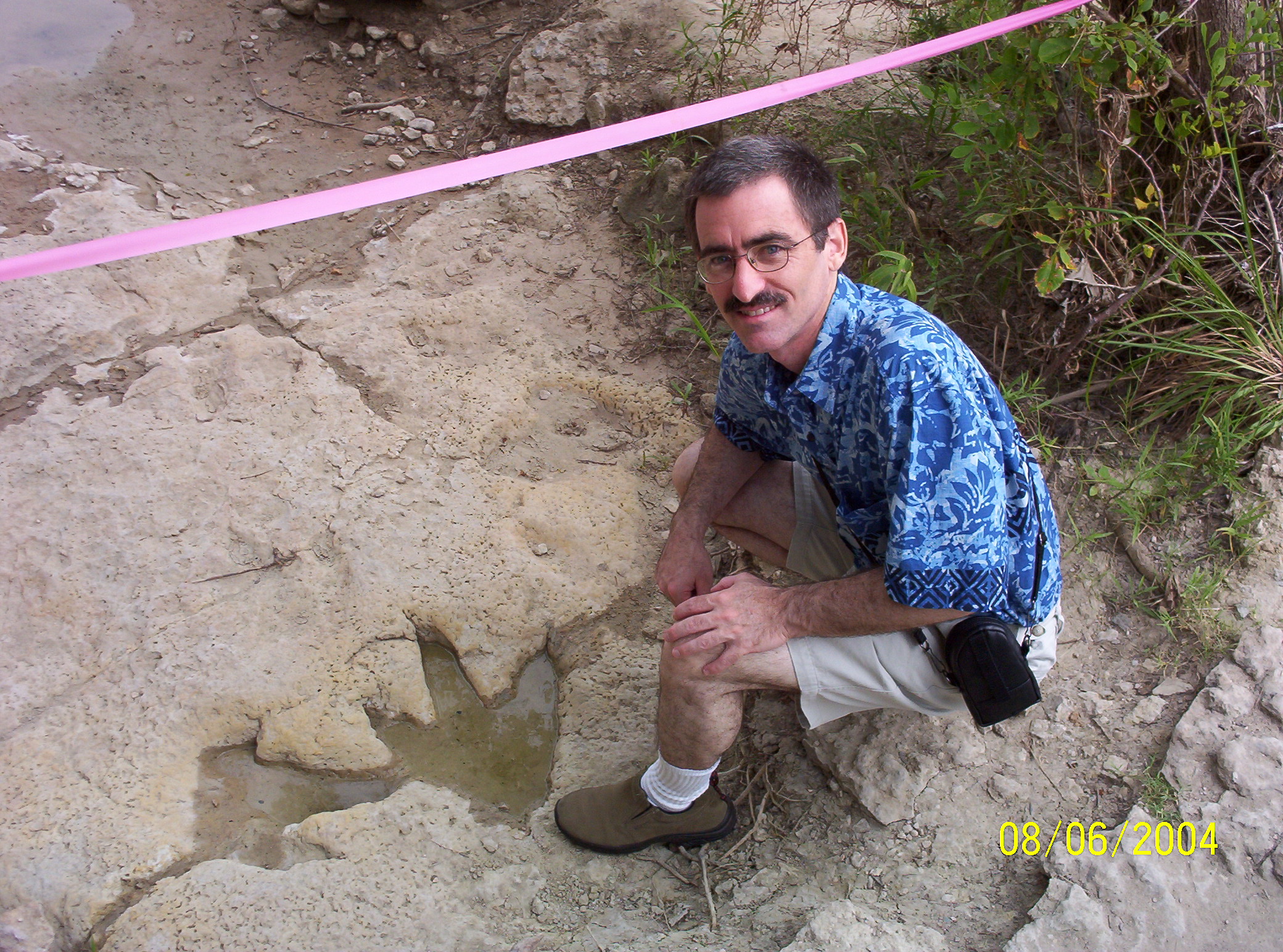
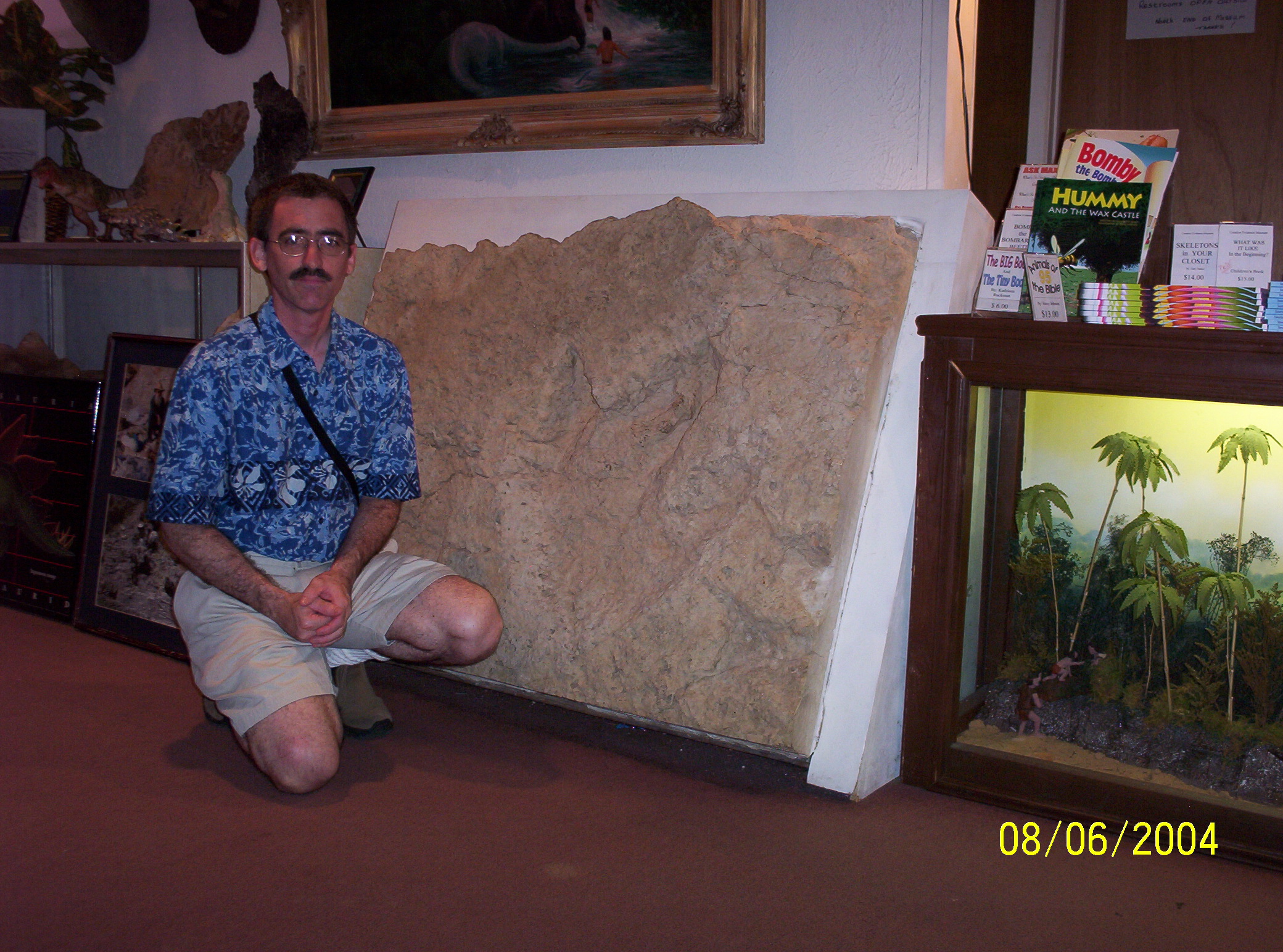




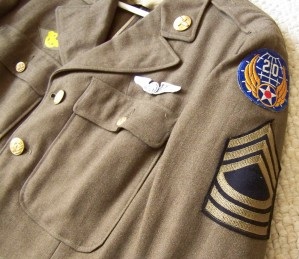

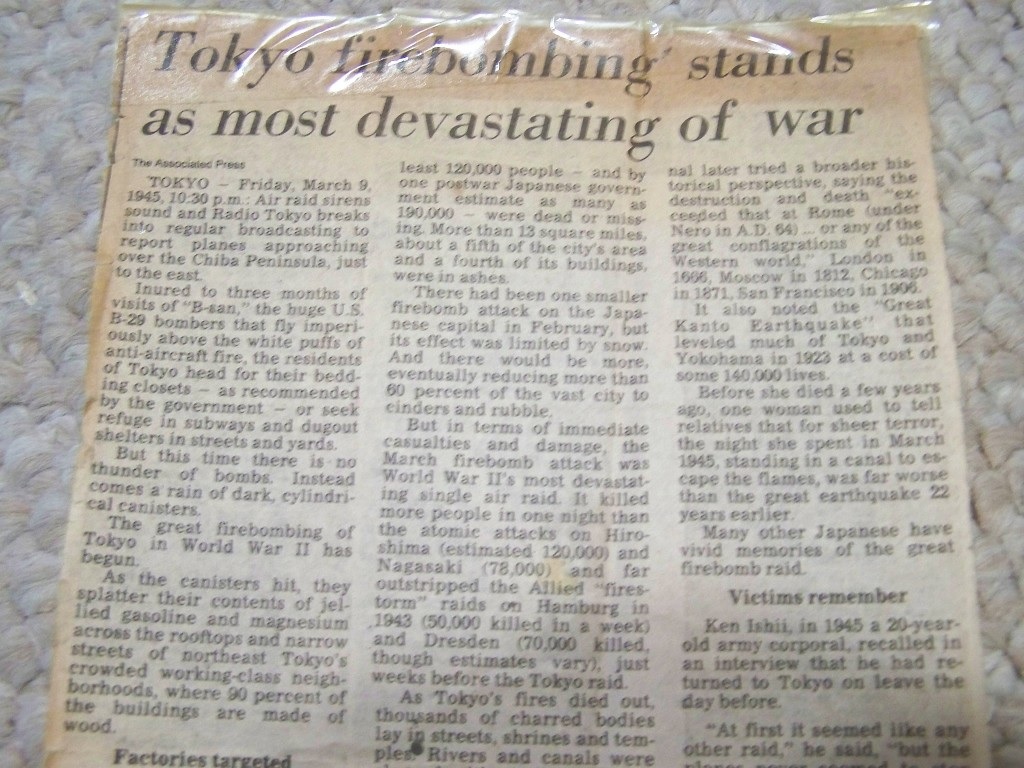
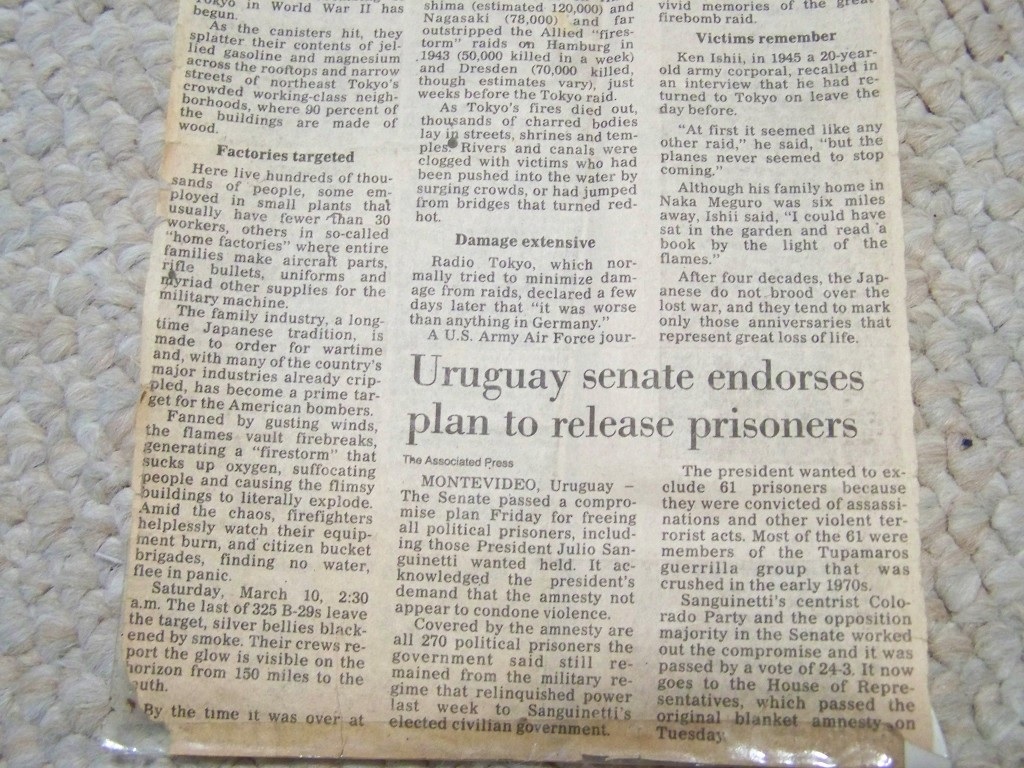
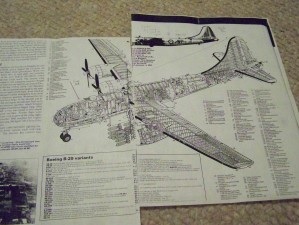
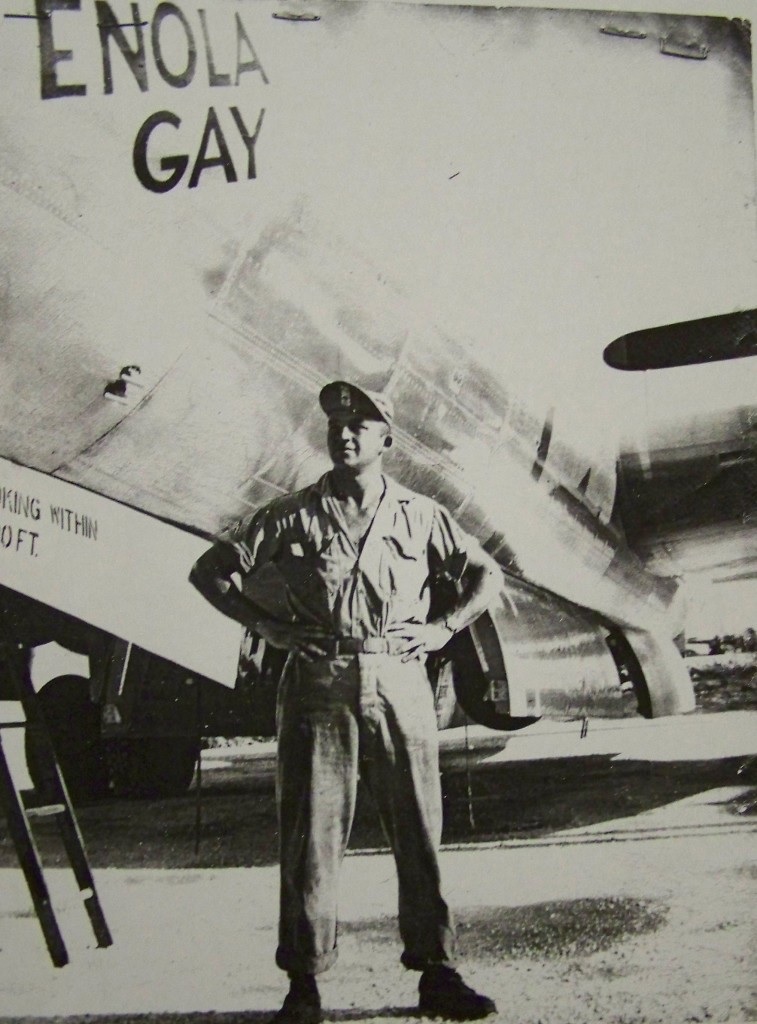
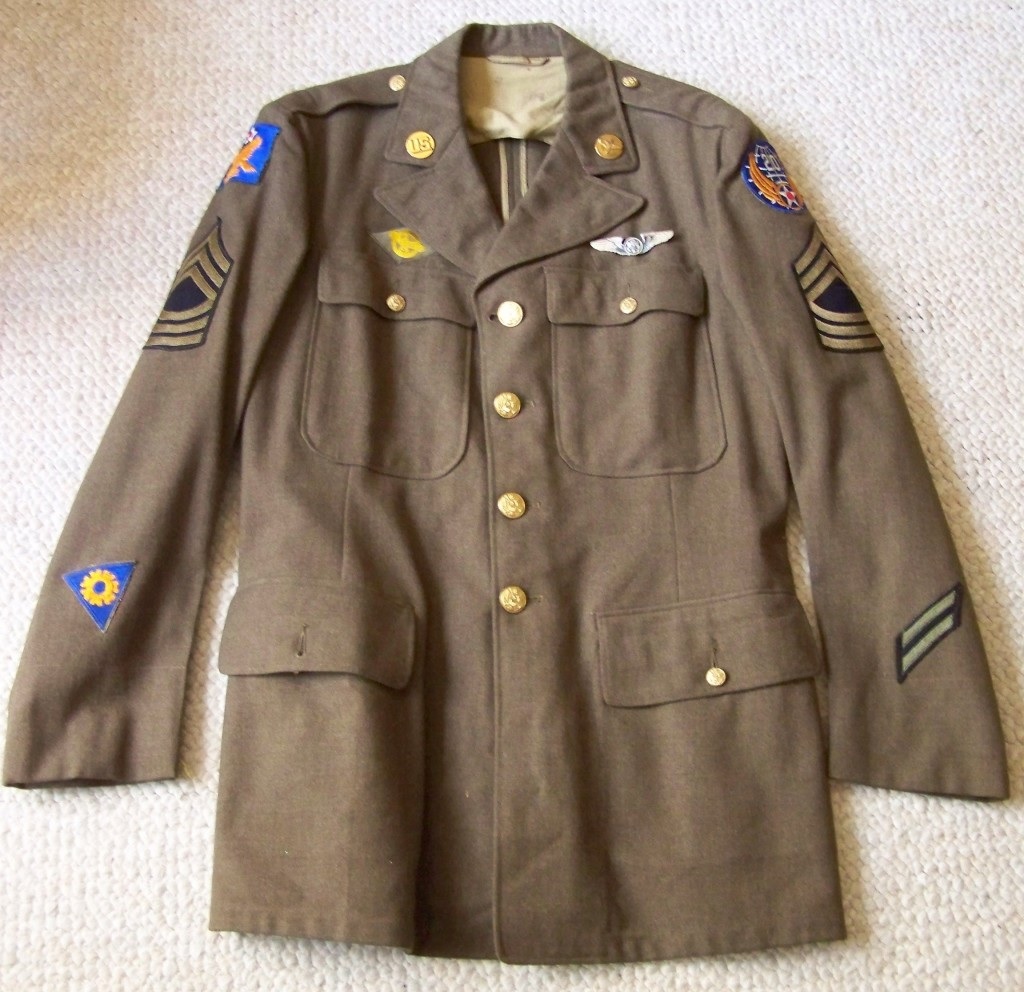


 Wings of the Wind

ARMORED FISH FOSSILS REWRITE EVOLUTIONARY STORY
August 11, 2013by Brian Thomas, M.S.
A special set of Australian fish fossils just derailed evolution’s long-held story of early fish origins. The remarkable fossils preserved detailed soft tissue body features, including the precise points where muscles attached to the ancient fish’s bones. These clues enabled paleontologists to reconstruct the now-extinct fish anatomy. Though expecting something much more primitive-looking, they discovered completely designed, fully-muscled armored fish. Now they have to rewrite the evolutionary bit about how jaws evolved.1
This interesting article may be seen in its entirety HERE.
cr
Note (6/18/2016): I had a story here that was removed from the original source so I went on a hunt to find the same related story and others. The one that was here originally is first. There are many more than three like it, but I will list two other similar stories that show the general view of current scientists within American Universities over the past decade or so.
ORIGINAL STORY THAT WAS HERE FROM A DIFFERENT POST…INTELLIGENT DESIGN AT BALL STATE 2013
INTELLEGENT DESIGN AT BALL STATE 2016
INTELLIGENT DESIGN AT IOWA STATE 2007
Share this: