I have read Mia Kristensen’s account of the experiences of a family deprived of their children by Scandinavian ‘child protection services’ (CPS), in Norway called Barnevernet. I have for over 30 years now been engaged in trying to assist in some of the work for families hit in this way and I know that what Mia writes is true for so very many, and is the result of a country’s very dysfunctional ‘child protection’.
The stories are most often told by parents or grandparents. The children who are in the hands of the child protection system are usually prevented from writing or saying openly anything that goes against the official version of the story, or they are afraid to speak because if they do, they know they will be isolated even more radically or their parents will be sanctioned against. For example, the rare, allowed meetings children-parents will be cut down on or taken away altogether.
*
But in some cases we hear more about the children’s perspective. Here are two stories. I know them to be true.
The first is about a day of celebration which is something like Christmas for Norwegian children: The two children of a family were taken into foster care. In spring came the ‘seventeenth of May’. It is Norwegian Constitution Day and is often called ‘children’s day’, the celebration being concentrated around happy events for children. The CPS have a principle of preventing reunions on occasions which can make children feel emotional about their family. However, in this case the 9-year-old girl was allowed by the CPS to visit her parents. Her younger brother was not. So the day was a misery for the girl. She did not want to take part in any happy celebration or watch parades, did not want to eat anything (children’s favourite food and ice creams are usually high points for them on ‘syttende mai’). She cried helplessly all day because her brother was not allowed to be with them and because they were not allowed to show that they loved their parents.
The other case has been taken up by Wings before: Landmark Report Exposes the Realities of Norwegian Child Protection. It concerns the municipality of Samnanger in Norway, which had got a new mayor and a head administrator and several politicians who wanted radical change, standing up against what the CPS had been doing. There was quite a fight in the community, but they managed to commission a realistic and revealing report of three local CPS cases. The report and some newspaper articles let the children have a voice too. One of the cases concerned a family of father and four children, now of age.
One of the boys said: “I didn’t have so many friends at school. Then the CPS also took my family from me.”
The oldest was a girl who had been 17 at the time and had not been taken. But although she had been allowed to remain with her father, she too was hit hard by the destruction of their family life: The CPS took everything I had – and smashed it.
The youngest, a girl, had been only 7 years old when she was separated from her father and all her siblings. Her reaction had been to be desperately frightened, unhappy and upset. The diagnosis of the CPS was, as expected, not to face the fact that this was the result of their actions, but to put her into institutional care and through her childhood and youth have her treated with various drugs, supposedly to calm her down and lessen her ‘abnormality’. The two lawyers making the report found her, on the contrary, to be normal and to communicate very realistically about the CPS ‘care’. She told them that she had been very afraid all the years in foster home and institutions. – It should take no great imagination on our part to see that she had experienced simply a variant of what prisoners from concentration camps and other places of torture tell us.
*
The European Court of Human Rights in Strasbourg has found the Norwegian state guilty of over 30 violations in 24 CPS cases concentrated around Article 8: the right to private and family life. But the Norwegian authorities have not been willing to return the children even in these cases. There seem to be fewer takings into care now in 2025 than earlier, but the way the CPS practice ‘protecting’ children is of the same kind as before. Mia Kristensen’s story could be from Norway any time between 1950 (or before that) and today.
One item of ideology is to my mind a dominant factor explaining official intransigence: It is widely believed in our society – and the teaching of this in the education of social workers has not changed – that biological family is of no particular importance to children, that siblings are just playmates for the time being, and parents simply replaceable ‘caregivers’ doing a job of providing a stimulating environment for children who are with them nearly accidentally. Therefore, families who desperately want their children returned home are simply seen as self-serving and vain. How Norwegian experts came to reject biological kinship as relevant in child welfare policy There is no understanding in the social work of many Western countries, certainly not in northern Europe, of how deep the natural bonds of love are which bind close relatives together. Or, in a variant formulation: Love is taken to be only a product of success. Only perfect parents and children, who are also completely satisfied with each other and whose lives develop in every way splendidly, are thought to experience mutual love and solidarity, as satisfaction. Hence, such imperfections as poverty and illness are suspect in the eyes of these ‘experts’, cf for instance A Christmas Wish, and examples e – h here: The Child Protection Service (CPS) – unfortunately the cause of grievous harm Part 2: Content, dimensions, causes and mechanisms of CPS activities
This belief in the cause of a feeling of belonging and trust is age-old and is found in many societies. In the USA there was a wave of this ideology about 25 years ago: Hillary and Bill Clinton – zealous promoters of forced adoptions in the USA (Section 3 of the article traces it, in a very short sketch, back more than 2000 years.)
I know there have been cases where U.S. authorities have separated children from parents when arresting them as unwanted immigrants. But there have also been loud protests against it. I recently came across three videos in connection with disregard of children’s needs of their family and of the home or country they feel is their own. The videos stem from a Senate Hearing in Washington DC on 3 December of this year. The hearing concerns proposed legislation about one particular tragic action of Russia in the present war: abduction and down-right enslaving of Ukrainian children. The Hearing was bipartisan and with representatives of the House invited as well: –Breaking news: Senate holds critical hearing on Russia war crimes against Ukrainian children | AC14 –U.S. SENATE HEARING: Ukrainian Ambassador Exposes Russia’s Child Abductions | DRM News | AC1F –Lindsey Graham Asks Ukraine Ambassador If Russia Has Admitted To Abducting Children In Occupied Land What is shown in the videos is glass clear and I very much hope that this initiative in the U.S. Senate will carry over to a clearer understanding that not everything we do to the children of our own societies is in ‘the best interest of the child’ either. In Europe too the emphasis has become very clear that the return of Ukrainian children to their own country, and to their own families if they are alive, is the top priority in a peace settlement, and that the abduction of them is a very serious war crime. Norwegian society is generally more placidly subservient and admiring of our own authorities than I think Americans are, so ideology without a solid, factual basis is even more difficult to see through in Norway. I do not see what we can do but continue to try and find out about it and document it as well as we can, and continue to spread information about it – in the true best interest of the child.
****** Marianne Haslev Skånland has worked as a professor of linguistics at the University of Bergen, and is now retired. She has worked on analysis and criticism of science, both generally and in areas of linguistics, psychology and child protection, and was a member of the scientific advisory board of Stiftelsen för rättspsykologi (The Foundation for Forensic Psychology) in Stockholm. She has functioned as an expert witness in child protection cases before a District Court, an Appeal Court and a County Committee, altogether five times in Norway, and once before Länsrätten in Sweden. She is engaged in social questions concerning human rights and health, and specially interested in the question of the scientific basis of the views of social services and the justice system concerning psychology and social life. She has lectured for many years on the position and influence of behaviorism and other schools of thought in linguistics and anthropology.
As many readers of this blog are aware, for quite some time I have been concerned about government organizations that are supposed to be in the business of helping parents raise their families. In many cases the exact opposite happens; children are taken from their parents for no good reason whatsoever. This happens in many places in our world but I have focused on Norway because of the particularly egregious cases there that I began learning about in 2016. I am keeping informed of the situation there and, as far as I can tell, things are as bad as they’ve ever been. Besides excellent articles I read coming out of Norway, I have also kept track of several social media sources where parents affected by the strange philosophies of these “helpful” government organizations share their stories. At the end of this year I am sharing one social media statement to illustrate an example of what I am referring to. This mother lives in Denmark which has a “Child Welfare System” very much like Norway’s. She follows and engages with Norwegian parents who are in the same situation. I chose her statement because Mia’s English is very good and I think she expresses feelings that many of the affected parents experience.
And now December begins. For many it is a month filled with joy, warmth, coziness and anticipation. A month where families come together and find peace in each other.
But for those of us affected by the system, December feels different.
Why would one decorate for Christmas when the family is torn apart?
How do you find the Christmas spirit when you are reminded every day of what you have lost?
We live in a society where we are expected to carry on as if nothing happened. The fact that we “wear it nicely”. That we just have to function.
But the truth is that many families have been divided because of:
– liars
– misunderstandings
– bad stomach feelings
– lack of professionalism
– lack of resources and support
None of us were perfect.
But no humans are perfect.
Everyone can learn. Anyone can grow.
The system should also be able to.
We talk so much about self-insight and mentalization – but the truth is that neither municipalities nor politicians live up to those concepts.
Instead, many families face a cold system, where help never comes, and where the consequence is the hardest: to lose their child.
December should be the time for families.
Instead, far too many are sitting alone, separated from the ones they love, without the opportunity to celebrate Christmas like everyone else.
This post is not about pity.
It’s all about fairness.
And to remind the community that there are families who do not celebrate anything this year – not because they don’t want to, but because their family has been taken from them.
For those of you who are not affected:
You are lucky to be able to celebrate Christmas with your children and family.
Just think for a moment about those who are not allowed.
A little understanding. A little bit of spaciousness. A little bit of humanity.
The list below was initiated on the 14 March 2012 and new points are added as time allows. (Click on the link after the article to see that item #75 was just added.)
The list contains arguments all of which have been used by the Nordic child protection service (CPS) and/or allied professions and people, in actual cases, such as in case reports and in court when the CPS argues for the necessity of taking children away from their parents and placing them in foster homes or institutions. They bring up the same kind of arguments to prevent foster children being allowed to return home in cases in which both parents and children say clearly that they want to be reunited. A couple of standard arguments are then added: The foster child ‘has now developed attachment to its foster parents’ (even when the child says no) and ‘the child must have routines and stability and not be moved’ (even when the CPS has moved the foster child many times).
It is serious that these types of argument are allowed in our courts and are even accepted by our judges. Most revealing of all is the fact that such arguments are suggested by the CPS at all. If there are really as many children as the CPS claims living under so seriously bad conditions that it is clearly necessary to take them out of their homes, why then are arguments like those below brought up at all, and in case after case?
And why does anybody believe that ‘child experts’ who come up with that kind of argument – even had it been only in a single case – can be trusted in their ‘diagnosing’ of other cases?
No conclusion is therefore possible other than this one: Children are being taken away from their parents and their home for no acceptable reason. Social workers and psychologists who eagerly argue in favour of depriving children of their parents, have their reasons, but they are not acceptable and are not at all in the best interest of the child.
*
(1) The father is out of work and cannot support the family.
(2) The father is ill and the mother cannot get paid work. Therefore the family is too badly off to pay for toys and for school and after-school activities for the children. [The foster home received many thousands of crowns each month for each foster child.]
(3) Clean clothes are not placed in ‘military order’ in the cupboard.
(4) The psychologist registered that the mother could not make an omelet to his satisfaction and she cuts the bread into too thick slices.
(5) The child looks eagerly at strangers around it and smiles at them. This means that it is not attached to its mother. [The mother stood talking to some people after visiting the social security office, while the baby in the pram looked eagerly at people around it.]
(6) The baby turns its face the wrong way when its father washes it. [Probably an insinuation that the child did not want to look at its father because it disliked him. In reality perhaps it didn’t want to get soap in its eyes, so what is the ‘wrong’ and ‘right’ way to avoid that?]
(7) The mother uses too much soap when cleaning. [Reported to the CPS by a ‘home helper’ who had been instructed by the CPS not to help with practical work but to ‘observe’ the family.]
(8) The father is too active, the mother is too passive. [CPS observers are frightening enough to make anybody either, out of sheer nervousness.]
(9) The father has a foot injury and cannot stand on a ladder. Therefore he is not able to clean the top of the window frames.
(10) The house does not have an indoor toilet but outdoor conveniences. [This assessment made by the CPS makes one wonder how they imagine generations of people survived in Scandinavia in previous centuries when everybody had outdoor toilets (not in the open, of course, but in a shed separate from the house and without any heating) and no CPS to ‘protect’ children against them. They were even in use in some parts of downtown Oslo 60 years ago and are still common with summer cabins and also with many winter cabins up in the mountains – can be freezing cold.]
(11) The mother has made a previous landlord angry because her cats had urinated on the floor. [This had happened several years before her daughter was born, but it was used as proof that the mother did not provide a good environment for her daughter.]
(12) The child is not interested in the ‘concept training’ in kindergarten.
(13) The mother wants to let the children’s grandmother bring them to and from physiotherapy and other medical treatment which they need, instead of taking them herself. In this the mother puts her own interests before the children’s. [The mother, who is a single provider, has started an education and goes to classes at the relevant times. The grandmother is more than willing to take the children to their treatment. The CPS works to pressure the mother into giving up her professional training – which would keep her locked in the power of the social services for financial reasons – to take the children to treatment herself and they try to forbid the grandmother to do so.]
(14) The son plays truant from school. [The mother even took unpaid leave from her work in order to walk with him to and from school. The CPS still blamed her for the boy’s not liking school.]
(15) The parents have asked the CPS for help because their child does not keep up with what he should learn in school. [Actually, many cases start by parents asking for some kind of help. They are then branded as incapable of giving care.]
(16) The mother is very small. When the daughter grows to become a teenager, the mother will not be able to tackle her.
(17) The grandmother is 54 years old. She is too old. The mother’s sister is 28. She is too young. [The boy’s mother had died and the family wanted to care for him. He was 12.]
(18) When visiting the children the grandmother wanted to embrace them. The CPS had to stop that, since it can create an unwanted attachment.
(19) When asked by the judge if she wanted to go home to her parents, the girl replied ‘yes’, but that is what all foster children want. She did not give any reason for wanting to go home. [From a court judgment. The fact that all/many want to go home is, in other words, turned into an argument for denying them the right to be reunited with their parents. The girl was 13 years old. She later said that the reason she had not replied to their ‘Why?’, was that she thought the judges were insane, since they could ask at all for a reason why she wanted to go home to her beloved parents.]
(20) Well, the girl says she wants to go home but of course she must be allowed to go on living in the foster home. [Said in court by the girl’s lawyer, who had been appointed by the authorities, completely against the girl’s own wishes, to represent the girl’s interests. Such lawyers regularly ‘represent’ the private client(s) but say what the CPS wants to hear.]
(21) The mother suffers from depression so one baby is enough for her to cope with. [The mother had twins and the CPS took one.]
(22) The mother has a bad back. She cannot take care of more than one child. [The CPS took the other child.]
(23) The mother is physically handicapped and does not have the full use of her legs. Therefore she cannot play with the children in the sand-lot or go skiing with them in winter.
(24) The mother is a person who abuses medication. [The medication was prescribed by a doctor for a purely physical illness.]
(25) The parents want to keep the child with them and do not want it to be placed in a foster home. This proves that they cannot cooperate with the CPS in the best interest of the child.
(26) The father has a negative attitude to the CPS.
(27) The parents will not let the psychologist film them at home to show them how poor their interaction with the child is. [Such filming is often called ‘Marte Meo method’. There is, however, no particular method for selecting situations to be filmed, nor for analysing what has been filmed or what is ‘wrong’. One is reminded of German Nazis, who used to film the helpless victims of their medical experiments.]
(28) The CPS offered the mother a ‘home milieu therapist’ to visit the home. The mother would not receive this helper, she said she did not understand what the therapist was supposed to do. Therefore, the CPS has not been able to uncover the degree of neglect the children are living under. [As clear a disclosure as any of the CPS’s real purpose of sending someone into the home.]
(29) The parents have complained that their son is bullied at school and that the school authorities do nothing to stop it. This points to the parents not being able to cooperate with the school.
(30) The parents have publicised their case in the media in order to get their daughter home from CPS care. This is so sensitive for the daughter that she would not be able to function in the local community outside their own house. [On the contrary: The local community was in reality solidly on the family’s side. After the girl had fled the foster home and absolutely resisted being carted back to the foster home once more, she of course functioned very well back in her parents’ home in company with her friends, at school and in the local community generally.]
(31) The daughter does not like fish-balls. This is a clear sign of incest.
(32) The child eats so fast that it must have been exposed to incest. [Reported by the personnel in a kindergarten, who are trained – like CPS workers are – in looking for ‘signs’ of abuse or neglect.]
(33) The child eats so slowly and unwillingly that it must have been the victim of incest.
(34) Alcohol is consumed in the home. [The children’s grandfather had been having a beer while he watched a football match on tv. When such a completely normal situation in very many Norwegian homes is mentioned in the CPS report, it at once insinuates that the alcohol habits in the home were beyond the acceptable.]
(35) The child is selective as regards whom she will play with in the kindergarten. She plays with little stones a lot. [Given by the kindergarten as one of the reasons for reporting the parents to the CPS. The girl was 6 years old. All her playmates had been slightly older and had left the kindergarten and gone to school. Not unnaturally, she was bored by being with only younger children. The CPS were alerted by the kindergarten about this ’cause for worry’.]
(36) The child’s linguistic development is delayed, due to insufficient stimulation from its parents. [Children vary up to several years in how their language develops. No particular stimulation is needed, however, the development up to full competence is biologically driven and takes care of itself, unless everybody in the child’s environment is a hundred per cent quiet.]
(37) The mother puts her own needs before those of her daughters. [Stated by a CPS psychologist in court to be a general characteristic of the mother’s behaviour. Asked to specify at least one instance of this, the psychologist thought for several minutes and finally said that the mother had taken a quarter of an hour out of a visitation with her daughters to go away from the daughters and smoke a cigarette outside. – The visit in fact lasted for a whole day. Both mother and daughters longed to be reunited and the girls longed for home. The mother was at one point on the edge of crying because she was not allowed to let them go home with her. She did not want the girls to see her in tears, out of fear that the CPS would, if she cried, accuse her of ‘exposing them to emotional outbursts’, which she knew from experience that the CPS would do. Going outside to smoke helped her master her emotions. She went outside also because she did not want to smoke indoors or expose her daughters to smoking. – The daughters were actually not upset to be alone for 15 minutes, since they knew their mother was just outside and they knew about not smoking indoors.]
(38) The parents have tried to make the County Governor and politicians take up their case in order to get their daughter home from foster care. They thereby prove that they are not able to give care.
(39) Take their passports away from them! [Suggested by the head of a CPS unit wanting to stop parents whom the CPS wanted to ‘investigate’, from going abroad. She evidently wanted the Norwegian police to carry out these confiscations on behalf of the Norwegian state, but still intended not only Norwegians passports to be taken but also those of foreigners in Norway holding passports issued by their countries.]
(40) The mother will not give us insight into her private life, which indicates that she has something to hide. [CPS workers are always looking for something – anything – to use against parents. If a parent is open about private matters, any problem they may have or have had sometime in their life, however normal, is sure to be used against them in the case documents and in court. If the parents choose to say ‘My purely personal affairs are nothing to do with the CPS’, that is, as in this case, also used by the CPS.]
(41) The boy’s parents fail in their care for him; they do not give him enough to eat. [The mother of one of the boy’s friends noticed that he ate a great deal of cake when he visited her son in their home, and she reported this to the CPS as a cause for worry.]
(42) The parents do not want our therapy. They say they are depressed after their child has been transferred to the care of the CPS but they refuse to receive therapy which would make them understand that they must put their own wants behind what is best for the child.
(43) You must write quite differently if we are to win through getting the child transferred to public care. [Said by an instructor to a class of general social workers whom he was teaching about child protection. They had as an exercise been asked to read through the documents in a case and write a report summarising the information as a preliminary to further case procedure. They had written a realistic report, mentioning and assessing good as well as bad in the family’s situation.]
(44) On one occasion the child found a piece of paper and started nibbling at it. The mother did not discover this. [Claimed by a social worker in her report of an inspection she made in the home. The mother objected that she had in fact discovered it and taken the paper away. Since she had no video-recording of the inspection visit, the social office would not accept her information, stating that she could not prove it.]
(45) The mother suffers from a deep ambivalence regarding entering into inter-personal relationships. [Stated by the CPS in a would-be ‘evaluation’ of her ability to ‘form a relationship’ to her child as well as to other people. The mother’s partner said that he had never noticed any such ambivalence.]
(46) Because of her good intellectual functioning and verbal skills we are of the opinion that the mother has been judged to function better than she really does.
(47) The mother wants to stay in bed in the morning. [The baby usually woke up at about 6.30 – 7 in the morning. The mother would then get up and change and breast-feed it. The baby used to go to sleep again at about 10 a.m. The mother, who by then was tired, wanted to rest while the baby slept. She was denied this by the personnel at the institution for mother-and-child, run by the CPS, where she was living.]
(48) The CPS is worried about children growing up with parents with psychiatric conditions. [The CPS makes no attempt to differentiate between conditions that do not harm the relationship parent-child and those that do. ‘Psychiatric conditions’ here includes everything from heavy psychoses to light, temporary feelings of depression or dejectedness or worry over practical problems. By some psychologists/psychiatrists about 800,000 Norwegians are estimated to be subject to such conditions.]
(49) Parents will never be able to fill the parental role if they for example tell their child coming home from school: “Tomorrow we are going to move.” [Stated by a social worker in a newspaper article arguing for the CPS as superior caretakers of children. – The CPS is actually even more abrupt than such condemned parents: They fetch children out of the classroom saying “You are being moved away from your family now.”]
(50) No, it’s you who are mad. [Said by a CPS worker to a very alarmed mother who said of her son: “Oh, but he is ill!” The boy had been taken by the CPS, and when his mother was after many months allowed to see him, he had lost almost 10 kilos. He was about 12 years old.]
(51) The boy is thirsty and drinks a lot. This is his mother’s fault. She has given him bad food-habits at home. [Said by the foster parents (of the same boy as in (50) above). The boy finally had to be taken to hospital and was at last diagnosed with diabetes. His mother was chased away from the hospital when she wanted to visit him there. The boy was even after this neglect shown by the CPS and the fosterparents not allowed to go home but was sent back to the foster home. He tried to commit suicide there by injecting himself with an overdose of insulin. When telling the foster father what he had done, the foster father was irritated and sent him to the hospital alone in a taxi.]
(52) The mother has been in CPS care herself. [One would think that the CPS, who maintain that their ‘care’ is unquestionably good and always saves children, would count it an asset that a mother had been in public care. But no, even persons who have been in their care for 10 years or more in their childhood, are regarded with suspicion when they become parents. Suddenly the CPS ‘care’ they have been given is not trusted to have benefited them after all. Any failing on their part is labelled ‘failure to give care’ and attributed to their own parents having ‘failed’ them and passed on this defect as ‘social inheritance’. The contradictory nature of CPS actions revealed by this argumentation is never admitted by the CPS, the courts or bureaucrats and politicians supporting the CPS.]
(53) When the child fell over, the mother just picked her up and put her back on her feet, without comforting her verbally. [The little girl had not cried and was not unhappy. She was just beginning to walk and often fell over without hurting herself.]
(54) The parents have a very small network. [Used in very many cases, to insinuate that neither are the parents surrounded by a lot of relatives and friends who can give help, nor are they likeable persons who give their children a good social setting.]
(55) The fact that the mother, at the age of 38, moves back to live in her widowed mother’s house, is not likely to convince us that she is able to take care of her son as a responsible adult should. [Stated in a writ to the court by the municipality which had taken her son. The municipality/CPS were confronted in court with the fact that they had in this way tried to ridicule the mother over having chosen living arrangements which are extremely common in communities all over the world. She was a single mother, and had moved from Oslo, where there was no longer any reason for her to live as far as work or the presence of friends were concerned. She had moved back to her childhood community both for sensible financial reasons and to be close to her relatives and some friends. (The presence of a network is, in other words, here not at all counted as positive, cf (54) above.) She at first lived in her mother’s house with her child, who was returned to her by the court, and was later able to build her own house in the neighbourhood.]
(56) If the boy is not kept under firm CPS authority until adult age, but is allowed to go home to his mother, he will likely develop into a dangerous criminal. [Stated in a letter written to the court by a psychologist the CPS wanted to use against the boy in court, even after they had been stopped from using that psychologist in the court case in which the boy and his mother tried to free him from the CPS. The boy had been taken from his parents when he was five, on the basis of a wrongful incest accusation. The parents had long ago been found innocent and received compensation in court. Still the boy was kept away from his family by force by the CPS, in foster home and institution life, both of which had made him desperately unhappy, for more than 10 years in all. – It is actually statistically quite on the cards that children who have been ‘treated’ by the CPS will go into crime, and the prison-like conditions under CPS is even found by many to be worse than ordinary prison. But the CPS completely fails to face the realities of cause and effect.]
(57) There is hardly anything in the way of children’s clothes and toys for the boy in the flat. [The mother’s response to this accusation in a CPS report was to laugh, open cupboards and drawers and show them that her son had plenty of toys and clothes. The next version from the CPS was then to claim that the mother was unnaturally concerned about clothing and toys.]
(58) We cannot know what kind of life the children have with their parents. [Reason given by a municipality board as justification for letting the CPS take the children from a family and refusing to let them return home, in spite of copious evidence given before the board of a very good home life. After being taken the children had guards every minute at school to stop them from escaping, and were not even allowed to close the door when they had to go to the lavatory at school. Both parents had professions at which they worked in their home, and wanted to home-school the children, but the children had had plenty of other interaction with other children in the area.]
(59) Some pairs of children’s skis were lying on the ground instead of being placed in strict order up against the wall. This shows the family to lack in order and structure. [Used as an argument in a report from a ‘home visit’ by the CPS.]
(60) The mother says no to letting her fourteen year old daughter go to a party. [Pointed out by a school psychologist in a report to the CPS, as an argument against the mother’s care. The girl wanted to go to a large rowdy do. The mother had said “No, you are not to go to that booze-up and stay out all night.” The girl then complained to the psychologist. He advised her to ask her mother again, and furnished her with arguments to use against her mother’s refusal. The answer was still no. The psychologist then wrote a report in which he claimed that this mother had difficulties establishing clear limits for the daughter.]
(61) The mother’s own parents died early. That will make it difficult for her to be a good mother herself. [An example of a typical, primitive environmental-deterministic view found among CPS social workers and their psychologists, who hold that people have no ability to manage their lives in a positive, self-reliant way.]
(62) No! Nobody is able to work their way out of their problems themselves. They just get heavier and heavier until one breaks down. [Stated by a head of the CPS in a court case against the CPS for damages caused to a mother whom the CPS had harassed with ‘investigations’ when she was in a temporarily difficult situation for which she had sought advice. – The same general view as in (61).]
(63) The mother is clumsy when using the tin-opener. [Statement by a psychologist.]
(64) The father seems stressed when the CPS workers are present. [Hardly to wonder at. The opposite would have been more abnormal, considering how the CPS proceed and the powers they have.]
(65) The mother does not stimulate the child verbally in the food-situation.
(66) A 12 year old son and his mother eat when they are hungry and not at a fixed time every day. [The CPS were not interested in the fact they had a very healthy diet.] (67) The parents do not notice the child and the child’s needs. [Cf (68).] (68) The parents are too concerned with the child and over-protect it. [Cf (67).]
(69) But you have siblings in the foster home, haven’t you? [Argument suggesting that the foster home was a better place than the home of the parents, because there were also other foster children in the foster home. The argument came from a member of a county committee (an administrative unit which makes first decisions in cases regarding forced removal of children from their parents or their return home). The case was one in which the parents and the daughter wanted to be reunited and the girl had fled the foster home. To the argument about ‘siblings’, the girl answered, with contempt: “There were some people living there. They are not my siblings.”]
(70) The boy shows strong reactions during the process of being returned from the foster parents to the parents. The child protection service has the theory that this is due to his having been traumatised by his mother breast-feeding him for the first two months of his life, and that he was re-traumatised at the returning process. [Argument used by the the child protection service of Haugesund as a reason why they refused to obey a judgment from the Supreme Court which decided that the boy should be returned to his family.]
(71) They have moved a lot. [This mother had moved, with her child, 3-4 times. The last time was when she moved from a flat in the basement to a flat some stories up in the same apartment building, because it was a nicer flat with more sun. – Moving is in some instances a result of poor economy and being unemployed. To consider moving negatively has long roots in Norwegian ‘culture’: a nomadic way of life is looked down on as suspicious. The worst manifestation of such views has been the persecution of the ‘Taters’ (a gipsy-type population group in Scandinavia), who have been regularly hunted down and the children abducted, sterilisation also used. The opinion of moving is standardised in the CPS idea of ‘vagabonding’ and is considered a factor in ‘care failure’. The ‘care’ of children in the CPS’s hands often leads to considerably more moves (up to 10-12), from temporary foster home to ‘permanent’ foster home and on to other foster homes and institutions, again and again, without, however, this being considered care failure carried out by the CPS. When parents move with their children, the children at least have the parents stably with them all the time. When the CPS moves them, they have nobody permanent.]
(72) There really must be something about you which we don’t know about, something which makes you a bad mother. [All previous reports and opinions in the case had shown this to be a good mother. But the CPS ‘considered’ her to be a bad one, and this was the argument they held to support their opinion. They had no other arguments.]
(73) The mother is extremely changeable in her contact with her daughter, either very intense or passive.
(74) A is a smiling baby. [From case document.] A is a silent and rigid baby. [Somewhere else in the same document.]
(75) The parents are not capable of cooperating with the school. That is care failure on the part of the parents. [Their child was especially interested in mathematics, was ahead of his class in the textbook, and wrote more advanced problems and their solutions into his workbook. His teacher did not like it, told him off, and repeatedly erased the advanced problems from his workbook. The parents objected to this and asked that some suitable guidance in mathematics to stimulate the boy’s interest be given to him, citing the law, which states that every child has a right to teaching adapted to the child’s abilities and level of knowledge and understanding. The school did not want to give the boy any such help, and instead reported the parents to the CPS, claiming that parents who demand something from the school and disagree with them, are deficient in their child care. The CPS, and the superior authority of both the CPS and the school: the municipality, agreed with the school and would not back down. The CPS, protected by the municipal authorities, initiated an investigation of the parents’ mental health. At one stage their accusation was added to: from being a charge against the parents’ attitude to the school it was strengthened by a charge (with no evidence) that the boy showed long-lasting, severely aberrant behaviour, supposedly a reflection of the parents’ enmity to society. A case exhausting to the family dragged on for several years, even though the realities of it had been described in newspapers and everybody in the community knew it.]
“(76) You are not to help the mother with anything, neither with the care of the baby nor with housework. You must only be a grandmother. [Said to a grandmother to prevent her from giving her daughter practical help. Because of illness, her daughter was in need of some assistance. (So are other mothers who have had their first baby, too, just after its birth.) The CPS wanted to prevent her from getting assistance, so that they could claim that she did not ‘cope with the role of mother’ and they could take the baby and have that accepted by the court. They themselves frequently invaded the house, but only to ‘observe’ and write down their ‘observations’, not to help in any way. They would not say what ‘just being a grandmother’ was supposed to be in the circumstances.]”
This list is absolutely incredible. Here is one example:
“(16) The mother is very small. When the daughter grows to become a teenager, the mother will not be able to tackle her.“
This is just one of the ridiculous reasons on this list. Does this Nordic country wish for mothers to be able to tackle their children? In countries where corporal punishment is outlawed, how can such insane reasons be used?
Compare #16 to #18:
“(18) When visiting the children the grandmother wanted to embrace them. The CPS had to stop that, since it can create an unwanted attachment.“
So, a mother must be able to tackle her child but a grandma can’t give her grandkids a hug.
After reading parts or all of the list above you may be wondering if things have gotten any better in Norway in 2024. According to one of my good sources in Norway:
“things in 2024 are less bad than in 2012 in the sense that the number of takings into care has gone down (because of protests and revelations and especially the judgments by the European Court of Human Rights in Strasbourg
but conditions are just as bad in that Barnevernet’s ideology is unchanged, they use the same reasoning and arguments as before (and the same amount of lies, force and power). In the cases for which Norway has been condemned in Strasbourg, Norway still prevents those children from being set free to go back to their parents or even to get contact with their parents which would facilitate a return. The ideology used to prevent contact and return is of course “attachment” to the foster parents or adoptive parents. Of course, in reality an adoption is NOT valid if it has been driven through by fraud, but Norwegian ideology is that adoption is irreversible.
We should also realize that although the number of children taken into care has gone down just recently, that is from an all time high that had been building until around 2010-2015. Before the great increase, the number was also far too high and the reasons given were of the same kind as on the list. The CPS takes as many children as they dare to take at any time.”
My understanding is that the CPS was terrible before the last 20 years also.
Here is an article that includes a section about “Adoption”.
I would like to thank Marianne for allowing me to publish this list here. Her endless efforts to educate others about these crimes are admirable and valuable.
Imagine having your child(ren) taken for any of the reasons stated above. I haven’t had the experience so I have no idea what these parents go through. I have read about the cases though and have commented in many posts here how insane some of these CPS policies are. The crimes continue and it seems there is little correction of these horrid offenses. Here is a short video made by two of my Facebook friends just yesterday. Suranya Aiyar and Marius Reikerås have been very involved with this problem for years and they give a good assessment of how things are now.
Written by Marianne Haslev Skånland, Professor Emeritus
It has been planned for several years, and has now finally been produced: a film based on a child protection case from 2011 onwards, a case in which an Indian couple’s two children were taken by the Norwegian CPS, called Barnevernet, in Stavanger. The film sounds, from the info I’ve been given and have seen, as though it’s pretty realistic.
The real case had many details and elements that have been misrepresented by Norwegian CPS and also by others. The children’s mother was scandalously treated by the child protection services, and unfortunately the children’s father eventually turned against her, unjustifiably, and almost campaigned for the CPS. This is NOT a case of a mother making up false claims or trying to make life miserable for her husband to get her way. Rather, it is a case that many people recognize: Child protection services burden the family with unreasonableness and horrors which ultimately cause the marriage to break up.
Many details about how the case ran are known and some of them are found in writing, in articles and documents. It would all of it be too much to have to write about all this (again), or to try effectively to counter all the distortions, falsehoods and misrepresentations that are resurfacing now, just as they have in the past, about the way the case evolved and the children’s development then and later. The central accusation from the CPS, the one they always make in Norwegian courts and which the Norwegian people bow to in respect, was the quack diagnosis of Sagarika: that she had a mental disorder and had also caused an ‘attachment disorder’ in the children – they ‘were not attached to their mother (in a healthy way)’. But the CPS made various other claims as well. They find it easy now to say that these allegations either did not exist or were not the reason why the children were taken. This is what the CPS usually says in child protection cases when there is criticism.
Now that the film is coming, the story is moving again, with the same false claims from the then head of the CPS in Stavanger, Gunnar Toresen, and now also from the children’s father. And these incorrect claims are allowed by Norwegian newspaper journalists to be served up unchallenged. I am adding links at the bottom of this article to a few articles which, among other things, contain significant inaccuracies. Feel free to read them, but you should not believe anything without checking it with those who know the matter and preferably Sagarika and the family in India, and especially with those who were active in obtaining and publishing correct information.
There are two people who more than anyone should have respect and admiration in this matter: they are Sagarika’s parents. They did not allow themselves to be fooled by prejudice or power, did not allow themselves to be overwhelmed or imagine all the malicious filth that was hurled at their daughter, but welcomed her with open arms when she in deep despair and after near torture in Norway succeeded in getting home, and they helped her faithfully in the years that followed. The children’s lives and development became very good from the time when she got them home. And they are definitely ‘attached to’ their mother!
I have found some of the articles and posts that some of us wrote and received at the time, and have added links to them. The most important is the case report prepared by Indian experts in 2012: “The confiscation of the Bhattacharya children by Norwegian authorities – a case study”.
Trine Overå Hansen, chief editor: Barnevernet under lupen (Barnevernet under scrutiny) Norge IDAG, 1 March 2023 (I can’t help but notice the difference between this article and the three articles below which “contain significant inaccuracies.” I understand that this news source, Norge IDAG, has an independent Christian orientation much different than most Norwegian publications. The editor of Norge IDAG has taken an interest in getting correct information about Barnevernet and knows a lot about the subject. -CR)
Examples of recent articles which, among other things, contain significant inaccuracies:
The fatal consequences are, of course, those envisaged for Norwegian trade and commerce, seen from the point of view of people who have, like our ‘Conservative Party’, never cared about these ‘finicky concerns about unsuccessful families and their unruly children’.
In this article, former CPS leader in Stavanger Gunnar Toresen is allowed to repeat all the false claims and add some more false ones. He says that Sagarika kidnapped the children, that there was agreement that the children could not live with their parents. And he says that he doesn’t know anything about how things have gone for the children from the time Sagarika kidnapped them. But in fact we know, and HE could get to know, but of course he does not want any info from sources who do not implicitly bow to what the CPS claims to be the truth.
If Toresen and Barnevernet do not know how the children have fared, it must be attributed to their own behavior and that of the Norwegian authorities through the case if they cannot just by a natural and friendly enquiry get those in the know to tell them the news that life together with their mother has been good for two children whom Barnevernet had been supposed to help, much better than when they were under the ‘care’ of Barnevernet.
Actually, Sagarika has been taking an active part in demonstrations against Barnevernet’s attacks on families from other nations too. Here a survey of several demonstrations in 2016, triggered by Barnevernet taking away 5 children from the (Norwegian-Romanian) family Bodnariu, and some photos from New Delhi and in Kolkata to support the Bodnarius:
Sagarika Chakraborti is there with the children, you see them on several photos, e.g. on the last photo, and some of the others, (e.g. the one with the big Norwegian flag and the people with posters, Sagarika in light blue jeans and a dark blue top, the children beside her).
Here is Anurup Bhattacharya, who turned on his wife when she would not agree to sign a binding statement saying that she would not ever be entitled to go to court in India to get the children back or get any connection with them. He ‘dreams’ up an even newer version of the story, picturing him as the discriminated against father who has not been able to see his children for 10 years. – Several questions are then pertinent, among them why he acted as he did in 2012. Why did suddenly the Indian newspaper Hindu write that Sagarika was after all a psychiatric case and mentally handicapped? Has the father paid any child support for these 10 years, and was his brother paid as a ‘foster father’ by Stavanger Municipality or the Norwegian State for the year the children were living in his parents’ house? One of the things the court in Bengal apparently said when they awarded custody to Sagarika, was that their father’s brother, who had been appointed by Norway and by his free will was to be the children’s foster father, had failed in his duties to them.
—————————————–
My comments:
It appears that I have gone over a year without writing anything about the state of Child Welfare. I have always been interested in the welfare of children but my interest grew dramatically with a story out of Norway in 2016. After some research I became convinced that children were being stolen by the organization in Norway designated to help families. My opinion has only been solidified by story after story like the Bodnariu case in 2016. Since then the European Court of Human Rights (ECtHR) has found the Norwegian state guilty of severe violation of human rights involving child welfare in cases that took years to be decided, and Norway has now been given status as a ‘habitual offender’ by the ECtHR.
This new movie is a great opportunity to bring the subject back to the fore. The truth is that little to no headway has been made against the sinister and embedded systems within many governments that cause stories like the one described above. Norway isn’t the only culprit. Since I’ve been watching this situation, Sweden, Great Britain, the United States and others have been guilty of similar crimes. The cases in Norway are so blatant that they are hard to ignore.
The good people in Norway continue to try to educate others about the situation so that changes can be made. They have had a difficult task because for every item published attempting to describe reality there are 20 others published that are like those mentioned at the end of Marianne’s links above along with glowing advertisements by adoption agencies.
Sadly, the great majority of these cases in Norway do not end well. After the children are taken from their parents, the Norwegian Child “Protection Services” (called the Barnevernet) does not look to worthy extended family members to take the children in for a period of time while any problems are resolved. If more than one child is taken, and it is usually the case when there is more than one child, the children are split up into different foster homes and the parents are given very little visitation, sometimes only a few hours a year. Much of the time the parents have to travel hours to see their children because they have been moved so far away.
I have experienced one of these stories firsthand. Because I had been very active protesting these crimes on social media, a Norwegian mother and a friend of hers felt comfortable contacting me about her situation. She had just left a “Mother’s Home” in Norway where mothers are “observed” to determine if they are worthy to continue caring for their child. She was staying with her friend, a highly qualified nurse, and her family, until she could decide her next move in life. I still remember the day she called me on the phone and told me that her son had been taken from his crib by Barnevernet workers.
We were in shock. Not long after that the brave young mother decided that I should document her experience in spite of possible problems it might cause. She wanted the world to know about this evil thing that had happened to her. Over the next few months I wrote posts here describing what she was going through as she shared every important event with me over the phone. The entire series of posts was eventually shared here as well. They were shared in a post entitled: A Miracle in the Norwegian CPS? Following the young mother’s struggles is something I will never forget.
How can I forget about the American mother who had her son stolen from her almost 10 years ago? The child was a little underweight but well within any healthy metric one might conjure up. He enjoyed being breastfed and was a bit slow in taking to solid food. On a day in 2013, agents from Norway’s child protection services, along with officers from the Norway police force, stormed the mother’s home and forced her, her baby’s father and her son to go to a local hospital. Shortly thereafter, the mother had her parental rights taken from her and her son was taken into custody by Norwegian officials. The parents were granted a few visitation hours a week. After a year of visitations, she was told she could no longer see him. Almost 10 years later all the mother knows is that her son’s name has been changed multiple times just in case she tried to find him. She has no idea where he is. The incredible story can be found here: “Norway Took My Child”: Child Protective Services Takes Baby from American Mom.
It is still happening. Nothing has changed. In fact, some think that things are getting worse. Many are afraid to say anything. Some have taken their children and left Norway. I don’t blame them. Mothers are being watched. They are being watched by school officials, neighbors, church members, and many others. There is no question that some mothers could use a little assistance in rearing their children. There is no question that there is a very small minority of women who should not be mothers. But when children are taken from their parents for questionable and even trivial reasons, there will be a reckoning. One day, those who are guilty of such crimes will face a natural and spiritual reality. It is a reality as real as the stories I have shared here. It is the reality that those guilty of such crimes will reap what they have sown.
The 12th and 13th cases in the past three years finding the Norwegian Child Welfare Services guilty of human rights offenses were decided on November 25th. If you would like to see the details of the cases and the statements of the Court, you can find them here and here.
If you would like to see all 13 decisions (now 24 less only 3 years later), you can find them here. I am thankful to Professor Marianne Skanland for compiling this list of cases.
As the number of such cases begin to pile up, it seems that the Norwegian Child Welfare services are oblivious to such proceedings. This response is inexcusable.
I was told by a case worker in Norway years ago that I shouldn’t be so concerned about Norway but should look to the problems within the American Child Protection Services. He was correct that we have similar problems in the U.S. and I have focused on them in more than one post. Here is one important article that focuses on promoters of forced adoption in the U.S. At the same time, American parents seem to have a better chance not to lose their children forever. There is no question we have problems here that need resolution. In my neck of the woods, the CPS appears to attempt reunification of parents with their children in a good percentage of cases. I know that things are not as good in many places in the U.S. And we have had our own strange cases here in Garland County.
One of the strangest Norway style events here involved the Stanley family in January of 2015. You can click on this sentence, taken from one of the reports of the incident, to see the entire story:
All of the Stanley children were rightfully returned to the parents eventually.
Here is a report and video from five months after the Stanley children were taken.
This is the video from the report:
What is happening in Norway garnered worldwide protests in 2016. The same types of incidents have created protests in rural Arkansas and in many other places in America. “Childnapping” is happening in the U.S. Sweden, Denmark, and England are just a few of the other countries where this problem has gotten very real to parents who never suspected that their children would be taken from them. This is a “first world” problem that many in Norway argue has become an industry. Thus, the focus on Norway which has sociologists that argue that half of all parents are not able to care for their children as well as the government can.
An interesting new “front” on the war against human rights violations towards families is taking place in Poland. A group called Ordo Iuris Institute for Legal Culture has taken an active role in several social questions, among them helping families against such injustices. It is a Polish Catholic organization and think tank. Not a fan of Catholic theology, I am a big fan of those trying to help others escape the long reach of certain governmental agencies that are in the business of wrecking families.
Ordo luris states in one of it’s publications that:
“…not only parents from Poland are asking for help from our lawyers, but also Poles from Germany, Norway and Great Britain, where the actions of oppressive child welfare offices lead to real tragedies. We cannot allow similar tragedies to take place in Poland as well.”
Here is one of the recent cases published by Ordo luris:
“Apart from co-creating pro-family law, it is equally important to provide comprehensive legal assistance to parents whose children are unjustly taken away. Recently, the quick reaction of Ordo Iuris lawyers led to the return of nine wrongly taken children to their mother, Mrs Ewa Bryła.
The children were placed in foster care, because the probation officer, after four months of supervision, arbitrarily stated that the mother was allegedly unable to raise them. The local Commune Social Welfare Center, which has been supporting the family for two years, did not agree with this opinion. The head of the center emphasized that during the long-term cooperation with the family, he had not noticed any gross irregularities that would authorize state authorities to take the children away from their mother. Its employees pointed out that the separation of the family was extremely harmful to the children and exposed them to breaking family ties with their mother, which are extremely strong.
Also, the doctor looking after the children did not say that they were neglected. On the other hand, the medical staff ensured that minors were guaranteed appropriate care. The local police pointed out that there were no interventions at Ewa’s house, no Blue Card procedure was initiated, and there was no addiction problem. In the family, there was only a problem with meeting the children’s compulsory schooling. However, Ewa, in cooperation with the family assistant and social workers, worked to overcome the emerging difficulties. The mother provided her children with the right conditions, encouraged them to learn, helped with homework and taught them good behavior.“
The goal here is to keep people apprised of the issue to a degree that puts this subject beyond the suspicion that this is some conspiracy theory. The problem is real. It does not get the coverage it should because of all of the other societal problems facing us in our times.
On March 10th, two important child welfare case decisions were made by the European Court of Human Rights (ECtHR). Unanimous convictions were made in both cases, clearly and strongly denouncing Norwegian authorities.
In each case, Norway was found in violation of Article 8 of the European Convention on Human Rights. Article 8 of the Convention describes the right to respect for private and family life. It states:
“1. Everyone has the right to respect for his private and family life, his home and his correspondence. 2. There shall be no interference by a public authority with the exercise of this right except such as is in accordance with the law and is necessary in a democratic society in the interests of national security, public safety or the economic well-being of the country, for the prevention of disorder or crime, for the protection of health or morals, or for the protection of the rights and freedoms of others.” (Guide on Article 8)
EHtCR judges found that Norwegian officials were guilty of unexcused and unbridled intrusion into normal family life in the March 10th decisions. These same officials/authorities were found guilty of being “responsible for a situation of family breakdown.”
In the case of HERNEHULT v. NORWAY, the Court noted a recent case where precedent had been clearly declared:
“61. The general principles applicable to cases involving child welfare measures, including measures such as those at issue in the present case, are well-established in the Court’s case-law, and were recently extensively set out in the case of Strand Lobben and Others v. Norway.”
Back in September (10 September 2019), in the case of STRAND LOBBEN AND OTHERS v. NORWAY, the ECtHR judges in Strasbourg found Norway in violation of Article 8 by a vote of thirteen to four.
In the second case decided on March 10th, PEDERSEN AND OTHERS v. NORWAY, the Court also referred to the Strand Lobben case:
“39. Other relevant material relating to domestic and international law is referred to in the Court’s recent judgment in the case of Strand Lobben and Others v. Norway.”
The two cases have several similarities. One is that the wives in each case were not born in Norway. Hernehult’s wife is a Romanian national, and Pedersen’s wife comes from the Philippines.
Each case originated in an application against the Kingdom of Norway lodged with the ECtHR under Article 34 of the Convention for the Protection of Human Rights and Fundamental Freedoms. Hernehult applied in March of 2016 and the Pedersens applied in August of 2015. The Hernehult settlement was 26,893 U.S. dollars for non-pecuniary damage, and the Pedersen settlement was 37,637 U.S. dollars for non-pecuniary damage and 10,216 U.S. dollars for costs and expenses.
Over 20 similar cases are slated to be decided by the EHtCR in the coming months. No one knows how many more applications against the Kingdom of Norway are forthcoming.
Editorial
How many more decisions like this will have to be made before the Norwegian Child Welfare Services, otherwise known as the Barnevernet, will begin to see that the world is waking up to its crimes? I am pleased by these wise decisions of the ECtHR. It is obvious that they can now see through all of the miasma belched into our habitat by the Barnevernet and Norwegian officials. I’m not aware of anyone who is satisfied with the settlements made, but these recent decisions are steps in the right direction certainly. The ECtHR’s references to the Lobben case in the March 10 decisions reveal recent, positive movement. The court is clear…it is using “well-established” “case law” for its decisions. I am very thankful and yet…
How can any reparations repay someone for a child stolen?
In the Pedersen case, paragraph 68 of the ECtHR judgment speaks for itself:
68. The Court emphasizes that to the extent that these decisions implied that the authorities had given up reunification of the child and the natural parents as the ultimate goal, the conclusion that placement must be considered to be long-term should only have been drawn after careful consideration and also taking account of the authorities’ positive duty to take measures to facilitate family reunion. However, in this case the decision to impose a very strict visiting regime cemented the situation at the very outset, making it highly probably that the child would become attached to the foster parents and alienated from the natural parents, thus precluding any realistic possibility of eventual reunification. Indeed, this is precisely what happened in the present case. In this respect, the Court recalls that where the authorities are responsible for a situation of family breakdown because they have failed in their obligation to take measures to facilitate family reunification, they may not base a decision to authorize adoption on the grounds of the absence of bonds between the parents and the child (see Strand Lobben and Others, cited above, § 208). You can read the details of the case and the court’s decision HERE.
In, 2013, Mr. Dan Mikael Hernehult moved to Norway with his wife and three boys and before the year was out (November 4th) the child welfare service issued emergency care orders for all three children in accordance with section 4-6 of the Child Welfare Act. (You can download a PDF copy of the Child Welfare act here.) They were placed in emergency foster homes the same day. The sad account does not stop there. You can read the details of the case and the court’s decision HERE.
Many in Norway have been hoping and praying for the type of decision made in the Hernehult case. In it, the Norwegian authorities were convicted of wrongfully taking two of the boys into care in the first place. This is an opening salvo of, hopefully, many more decisions like it.
Professor Marianne Haslev Skånland is the one who referred me to Paragraph 68 in the Pedersen case and she was particularly pleased with the decision in the Hernehult case. She writes:
“The judgments have made things increasingly clear, up to now, when they write so clearly that they (the ECtHR judges) both condemn the taking into care of two of the children, AND the failure to return them.”
She also states:
“I am really most of all glad of the judgments from February 2020 which I found against Russia and Romania. Not because I am glad to see that in those countries, too, they have social services which more or less frequently make enemies of parents and seem to delight in disrupting family bonds. But because I see a trend in what the ECtHR is doing: They now seem wide awake to the fact that they have a duty to carry out here: help combat a very destructive trend – the trend of believing that biological parents are of no importance to their children and that the social services can provide children with better conditions and satisfactory ’stimulation’! That is pure, speculative psychobabble – quackery, and all experience disproves it.”
Marianne’s description of Barnevernet philosophies as “speculative psychobabble” fits my understanding perfectly. She has broad knowledge of child welfare services inside and outside of her home country of Norway. HERE, on her homepage, you can see links to the Norwegian cases leading up to and including those mentioned in this post.
With all of the challenges families face in our time, the last concern should be about government entities separating loving families. Many countries are having similar problems. It is important that we become aware of the philosophies of child welfare in all countries.
I appreciate those who have worked so hard to create awareness about this important issue and I congratulate those who have spent years fighting to see that these cases made their way to court.
American children Nikita (10), Elizabeth (7) and Brigita (11) were forcefully removed from their loving parents Natalya Shutakova and Zygys Aleksandavicius on May, 20th 2019. The evil will of the Barnevernet (Norway’s “Child Welfare Service”) has been accomplished. The children are now split between three different foster parents.
My understanding is that Brigita complained about her parents at school. She was unhappy about a disagreement she had with her parents. The authorities were contacted and the children were removed from their parents. Since the incident, Brigita has stated that she lied because she was upset with her parents. Her admission is not good enough to make a difference in Norway. She and her siblings are indefinitely separated from their parents and each other except for a few visits of a few hours each year.
Nothing has changed in Norway. Worldwide protests against such behavior have made a difference in only one case that I’m aware of. Foreign government complaints have gone unheeded and some foreign governments haven’t done enough to address the problem. (The U.S. is one of these.) Reprimands of human rights violations at the European Court of Human Rights have been hopeful but have caused no real positive change within the country. The hope is that the number of cases being presented to the ECHR will eventually cause Norwegian officials to see the tragic error of their ways and force them to create an entirely new system built on common sense child rearing instead of “psycho-babble” (as Marianne would call it.)
I have hope for Norway because I know that prayer is powerful. I have hope for Norway because of some of the wonderful people I’ve met through my advocacy.
Tor Åge Berglid is a man on a mission with a team of other like-minded people making protests all over the world. He is a Norwegian who has been very active in the attempt to publicize the horrible actions of his country’s “Child Protection Service.” Called the Barnevernet, the Norwegian CPS is government funded (like those of most countries), and it can be very cruel. It is not unusual for the Barnevernet to steal children from their parents in Norway.
Tor’s main goal is to unite people and he believes that “the focus is to lift other people up and tell them that their voices are important, to join into this question about what constitutes family life. Is God’s idea of family life better than the state’s attempt to do a better job?”
Recently, Tor and others represented those who are sick and tired of families being destroyed by the Barnevernet. In a national T.V. debate, he went head to head with the Norwegian Minister for Children and two other “important” Norwegian officials. Many, including me, were pleased with his effort.
Here is a short clip in Norwegian where one can get a sense of Tor’s passion:
Unfortunately, too many people in Norway are afraid to speak out. The percentage of those unaware of the problem is hard to figure since the government propaganda machine constantly spews out words of wonder about its child care system among other things. Advertisements encouraging people to become foster parents make the job look easy and lucrative. The propaganda drowns out the voices attempting to share the reality of the situation.
After having the recent privilege of speaking to and messaging Tor, I informed him that I would do my best to share my views on these developments as a Christian. John 1:5 states: “The Light shines in the darkness, and the darkness did not comprehend it.” In this verse, the light is referring to Jesus Christ. According to the Bible (the book of Acts) “there is salvation in no one else, for there is no other name under heaven given among men by which we must be saved.”
Knowing these truths, and that Christianity once held great influence in Norway, it is sad to “hear” mostly silence from “Christian” leaders and pastors in response to such tragic human rights offences.
God is a righteous entity who loves his creation. He is an advocate for the helpless and hurting. One day, all the cruelty that man has dished out will be exposed. Those who have asked for forgiveness will have been forgiven. Those who “did not see fit to acknowledge God any longer, God gave them over to a depraved mind..” (Romans 1:28)
Tor’s statement is evidence that there are people in Norway who know what is happening and still care. They want transparency. I am in contact with others like him. They are still in the fight. They have not given up in spite of the fact that the current against them is strong.
Norway’s recent record at the The European Court of Human Rights (ECHR or ECtHR) is not good. They have been spanked more than once for human rights violations. More cases are currently pending at the court in Strasbourg, France.
What is Norway’s response? It appears that a new batch of laws dealing with “the Welfare of Children” is being worked on. My current understanding (from what I believe to be very good sources) is that the new laws will only make things worse.
I have come to the same conclusion as Steven Bennett, the British writer who published “Stolen Childhood: The truth about Norway’s child welfare system.” Steven, a Christian, believes that the system needs to be completely dismantled and restarted with new founding principles that really stand for the rights of every child. See book description HERE.
It can be argued that the first institution created by God was the family. Norway, though a recent focus for very good reason, is a reflection of what is happening to the family in much of the world. It appears that evil forces are out to destroy that which God has created. One need look no further than recent laws passed by the Supreme Court of the country where this blog originates, America. The family has been redefined to mean just about whatever someone wants it to be. Sadly, this problem is increasing throughout Europe and the current beachhead there is now in Strasbourg, France at the EHRC, where the cases brought forward will test humanity in the consideration of how much power the state should have in family life.
I agree with Tor and Gro Hillestad Thune (who wrote the forward to Steven Bennett’s book) that the state should let the parents do the parenting unless intervention is absolutely necessary, and even then with caution.
I admire people who are willing to stand up for those suffering at the hands of those with unbridled power. May God bless Tor and those like him who have invested in the lives of families.
Please pray for those who are involved in organizing and raising awareness that the family is in crisis in much of the world. You may not be able to make it to an event but your prayers can be very powerful. We saw evidence of that in the Worldwide protests that took place in 2016.
“…let justice roll down like waters And righteousness like an ever-flowing stream.” (Amos 5:24)
NOTE: 2 OF THE 3 EXPERTS SPEAK IN ENGLISH, THE FIRST IN NORWEGIAN WITH ENGLISH SUBTITLES
For the past couple of years, this blog has been involved in helping bring awareness to an evil system of “Child Protection Services” in Norway called the Barnevernet.
Sadly, many of the intellectuals in Norway are silent. More difficult to believe, the vast majority of the Christians and Christian leaders are silent. Since these two say little, of course, the vast majority of the media does nothing. Here are a few highly educated Norwegians who understand well what is happening in their country and they are not afraid to talk about it. There is a similar problem in the U.S. but we still have due process for the most part. If parts of the U.S. CPS system ever becomes as much of an industry as the Barnevernet (and some might argue that certain offices already have), I hope a much better percentage of intellectuals come forward in the U.S. than we have seen in Norway.
Lastly, but happily, I am able to note that one of the people so involved in trying to help people see the truth has made more than several comments on this blog. Professor Marianne H. Skanland, featured in this short video, is as well aware of the problem as anyone. After hearing many people speak about the situation in Norway, I feel she has the best view of the situation that I have heard. I have learned a lot from her.
I wish the people of Norway the best. In the video, Marianne notes two positive things that have happened to help those affected cruelly by the Barnevernet. The first is the internet. I wholeheartedly agree with her. This issue is getting quite a good amount of attention online. The second is international protests that have put pressure on Norwegian leaders. Sadly, this has waned in the streets of other countries, but there has been a noticeable increase in social media activity. It has been slow to develop but more people are learning of this problem daily.
Marianne has always warned me that this is a worldwide problem, not just something happening in Norway. She has referred me to more than one good book on “psychology” in America. The book that I read was authored by an American where “the author exposes the misguided beliefs and shoddy practices used by most psychotherapists. He examines the pop psych beliefs and explores the debilitating effects they have on everyone.” (Quote from the Amazon ad) The Entire title of the book summarizes its point nicely: House of Cards, Psychology and Psychotherapy built on Myth.
People in all nations need to be vigilant. Our children’s lives, thus our future, is at stake. Even if this wasn’t a “future” problem, we must be kind enough to treat our children with the dignity and understanding they deserve.
Amy J. is an American citizen who lives in Norway. In July 2013 her worst nightmare began. Without any warning, the Norwegian Child Welfare Services known as ‘Barnevernet’ accompanied by police knocked at her door, saying that her 19-month-old son Tyler had to be taken to a hospital for an examination immediately.
What happened? In the weeks leading up to the taking of Tyler, the young mother was increasingly concerned about the growth curve of her 18-month-old son. Tyler did not yet want to move to more solid food but instead continued to prefer breastmilk. Tyler was Amy’s first child, so she lacked the experience to know that children can develop quite individually. But, being a concerned mother, Amy even took Tyler for medical check-ups three times a month in order to monitor the growth process very closely. Then, came the summer. Amy went on a vacation with Tyler to America for two weeks and visited friends and relatives.
But, as soon as they returned back to Norway, the child welfare service, together with the police came to her house, saying that Tyler must be examined immediately in a hospital. Amy found out later that someone had alerted the youth welfare office in order to maliciously harm her. Being completely overwhelmed by the situation Amy agreed to go to a hospital with them. Also, Kevin M., the Norwegian father of the child came along. At the hospital a doctor diagnosed Tyler as “slightly underweight.” The boy would have had to weigh 10 kg, the doctor said. But Tyler weighed only 9.6 kg, which is actually not a reason for a concern according to the weight charts. The doctor also criticized that Amy was still breastfeeding her son.
Instead of offering advice to improve the nursing, the employees of the child welfare office now wanted to intervene on the basis of the medical diagnosis and remove the child from the mother. This led to a verbal confrontation which the father filmed with his smartphone. It’s a scene that can now be found on Youtube. “When will I see my son again?” Asked Kevin M. “We cannot tell you that yet,” replied one of the employees of the child welfare office. Finally, Kevin was ejected from the hospital as the argument got louder and louder.
What followed next was like a scene from a Hollywood movie. Kevin went back to the hospital and put on a doctor’s outfit. In disguise, he was able to go to room where his little son Tyler was taken in the meantime. He took his son unnoticed, left the building in a hurry, and drove around the area aimlessly, knowing that these might be the last moments with his son. Finally, he was stopped by several police cars. One police officer on the roadside even threw a big stone at the car, which nearly hit his child.
Kevin was then detained for one night for attempted child abduction. He was released the next day, because a judge realized that Kevin was the biological father and he still had parental rights. However, little Tyler remained in the care of the Norwegian child welfare office. For the time being the parents still had the right to visit and occasionally see Tyler – in a police station behind double-locked doors. But, a year later the visitation rights were cancelled. The authorities saw a potential abduction risk as Amy is an American citizen and they didn’t want her to take Tyler to America. In the following court trials this was also the main argument for removing parental rights from both her and Kevin. On September 22, 2014, Amy saw her son for the last time. Up to now both she and Kevin don’t know where Tyler is and how he is doing.
In order to hide the child’s new whereabouts, the authorities changed Tyler’s name twice. At the age of four years old, Tyler already had three different names. And, why did this happen? The Norwegian Child Welfare Services stated that they acted only in the Child’s best interest. But, how can such traumatic experiences serve the best interests of a child at such a young age? Especially, in the first years of life, the love and affection of the biological mother are known to be of great importance for the healthy development of a child.
Meanwhile, Amy has gone through all legal options in Norway to get her son back. In the spring of 2016, the case was rejected by the Norwegian Supreme Court. But, Amy doesn’t want to give up. Through a Christian initiative in Vienna / Austria, Amy was able to get in contact with international lawyers. They looked at her case documents, discovered Human Rights violations and helped her to file the case to the European Court of Human Rights. Also, the Christian initiative in Vienna showed further interest in the case. They launched a campaign on Facebook in order to raise awareness for Amy. They challenged people to post a selfie of themselves holding a poster which stated, “Norway, return Tyler to Amy”.
It is still uncertain how the case of Amy J. will end up. Once again, a family in Norway was torn apart for no good reason. Once again, a child in Norway was sentenced to extreme traumatic experiences. And again, we are supposed to believe that it served the welfare of the child. After the many worldwide protests and media reports, the government in Norway has repeatedly stated that it wants to look more closely into their child care system. But, so far Norway clearly fails to implement anything.
– – – – – –
Written by Björn Korf
Björn comes originally from Germany. He is a radio station manager for a private Christian Radio broadcaster in Vienna / Austria. He is married to Hee-Jung from South Korea and they have two Children.
My comment: Amy’s is one of the three cases I am following in “Recent Accounts of Children Taken” at the top of this blog. Her story is bizarre yet, she is not unlike so many others in Norway. I have known Bjorn for awhile now. I respect his continued efforts to help families like Amy’s.
Born Again
Beth is a born again Christian who lives in Canada. She believes that Jesus is the the way, the truth, and the life and she also believes that we are saved by grace through faith in Christ alone. She blogs on a variety of topics.
Elizabeth Burke's Blog
Elizabeth is a writer of Evangelical Christian books based in Ireland. Her books are currently published under “Ready Writer Publications.” Her blog is a testimony to her Christian faith and always an enjoyable read.
excatholic4christ
Tom has a loving heart for Catholics and his blog is an attempt to help those in Catholic churches understand that we are saved by grace alone. He blogs on a variety of topics.
Heavenly Raindrops
God-inspired words and images to bring blessings like rain
m'Kayla's korner
Make sure that the light you think you have is not actually darkness. Luke 11:35
Mrs. Acuna's Blog
If you have a teenager or anyone close to being one, this is a must read
The Domain for Truth
Slimjim’s “about” states: “(Jim Lee) is a pastor. He is a faithful servant of the church and his Saviour. Although young in age he is trying to be an apologist for the faith. “
The Hope Blog
Former Christian Talk Show Host, Ingrid Schlueter’s blog
The Narrowing Path
A blog to help Christians in Australia connect the dots…(it’s helped me here in the “good” ole U.S.A.)
The Realist Juggernaut
John is a fellow truth-seeker and his blog mission is to navigate the intricate maze of reality, bringing you unfiltered insights and thought-provoking discussions. John efficiently balances news and faith in our challenging times.


 Posted by Chris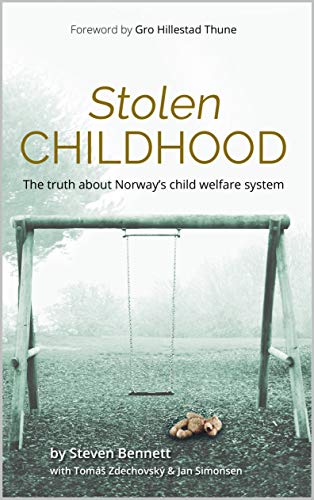
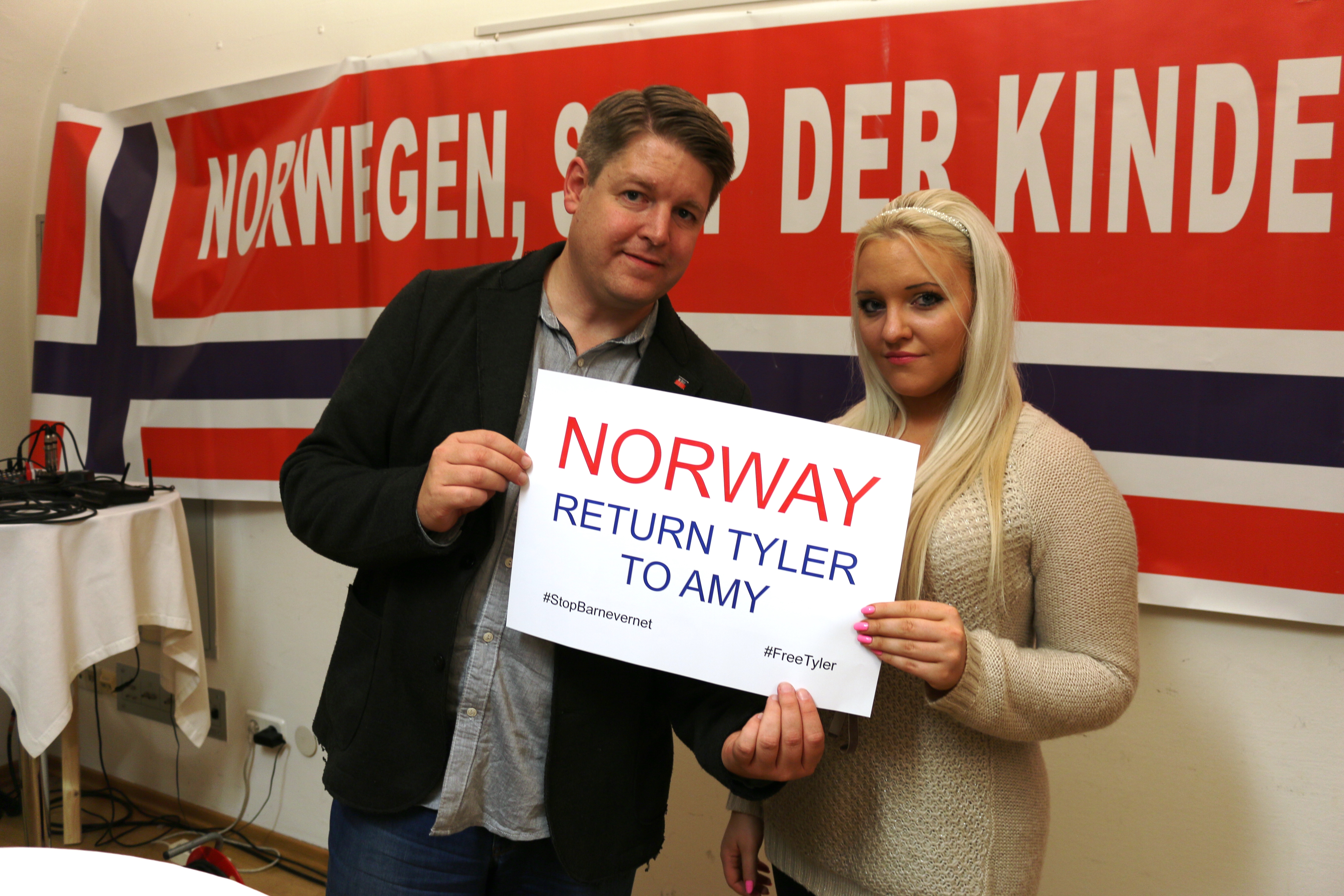


 Wings of the Wind
Families Continue to be Torn Apart by Child Welfare Services in Norway and Elsewhere
December 30, 2025By Marianne Haslev Skånland
I have read Mia Kristensen’s account of the experiences of a family deprived of their children by Scandinavian ‘child protection services’ (CPS), in Norway called Barnevernet. I have for over 30 years now been engaged in trying to assist in some of the work for families hit in this way and I know that what Mia writes is true for so very many, and is the result of a country’s very dysfunctional ‘child protection’.
The stories are most often told by parents or grandparents. The children who are in the hands of the child protection system are usually prevented from writing or saying openly anything that goes against the official version of the story, or they are afraid to speak because if they do, they know they will be isolated even more radically or their parents will be sanctioned against. For example, the rare, allowed meetings children-parents will be cut down on or taken away altogether.
*
But in some cases we hear more about the children’s perspective. Here are two stories. I know them to be true.
The first is about a day of celebration which is something like Christmas for Norwegian children: The two children of a family were taken into foster care. In spring came the ‘seventeenth of May’. It is Norwegian Constitution Day and is often called ‘children’s day’, the celebration being concentrated around happy events for children.
The CPS have a principle of preventing reunions on occasions which can make children feel emotional about their family. However, in this case the 9-year-old girl was allowed by the CPS to visit her parents. Her younger brother was not. So the day was a misery for the girl. She did not want to take part in any happy celebration or watch parades, did not want to eat anything (children’s favourite food and ice creams are usually high points for them on ‘syttende mai’). She cried helplessly all day because her brother was not allowed to be with them and because they were not allowed to show that they loved their parents.
The other case has been taken up by Wings before:
Landmark Report Exposes the Realities of Norwegian Child Protection. It concerns the municipality of Samnanger in Norway, which had got a new mayor and a head administrator and several politicians who wanted radical change, standing up against what the CPS had been doing. There was quite a fight in the community, but they managed to commission a realistic and revealing report of three local CPS cases. The report and some newspaper articles let the children have a voice too. One of the cases concerned a family of father and four children, now of age.
One of the boys said: “I didn’t have so many friends at school. Then the CPS also took my family from me.”
The oldest was a girl who had been 17 at the time and had not been taken. But although she had been allowed to remain with her father, she too was hit hard by the destruction of their family life: The CPS took everything I had – and smashed it.
The youngest, a girl, had been only 7 years old when she was separated from her father and all her siblings. Her reaction had been to be desperately frightened, unhappy and upset. The diagnosis of the CPS was, as expected, not to face the fact that this was the result of their actions, but to put her into institutional care and through her childhood and youth have her treated with various drugs, supposedly to calm her down and lessen her ‘abnormality’.
The two lawyers making the report found her, on the contrary, to be normal and to communicate very realistically about the CPS ‘care’. She told them that she had been very afraid all the years in foster home and institutions. – It should take no great imagination on our part to see that she had experienced simply a variant of what prisoners from concentration camps and other places of torture tell us.
*
The European Court of Human Rights in Strasbourg has found the Norwegian state guilty of over 30 violations in 24 CPS cases concentrated around Article 8: the right to private and family life. But the Norwegian authorities have not been willing to return the children even in these cases.
There seem to be fewer takings into care now in 2025 than earlier, but the way the CPS practice ‘protecting’ children is of the same kind as before. Mia Kristensen’s story could be from Norway any time between 1950 (or before that) and today.
One item of ideology is to my mind a dominant factor explaining official intransigence: It is widely believed in our society – and the teaching of this in the education of social workers has not changed – that biological family is of no particular importance to children, that siblings are just playmates for the time being, and parents simply replaceable ‘caregivers’ doing a job of providing a stimulating environment for children who are with them nearly accidentally. Therefore, families who desperately want their children returned home are simply seen as self-serving and vain.
How Norwegian experts came to reject biological kinship as relevant in child welfare policy
There is no understanding in the social work of many Western countries, certainly not in northern Europe, of how deep the natural bonds of love are which bind close relatives together. Or, in a variant formulation: Love is taken to be only a product of success. Only perfect parents and children, who are also completely satisfied with each other and whose lives develop in every way splendidly, are thought to experience mutual love and solidarity, as satisfaction. Hence, such imperfections as poverty and illness are suspect in the eyes of these ‘experts’, cf for instance A Christmas Wish,
and examples e – h here:
The Child Protection Service (CPS) – unfortunately the cause of grievous harm
Part 2: Content, dimensions, causes and mechanisms of CPS activities
This belief in the cause of a feeling of belonging and trust is age-old and is found in many societies. In the USA there was a wave of this ideology about 25 years ago:
Hillary and Bill Clinton – zealous promoters of forced adoptions in the USA
(Section 3 of the article traces it, in a very short sketch, back more than 2000 years.)
I know there have been cases where U.S. authorities have separated children from parents when arresting them as unwanted immigrants. But there have also been loud protests against it.
I recently came across three videos in connection with disregard of children’s needs of their family and of the home or country they feel is their own. The videos stem from a Senate Hearing in Washington DC on 3 December of this year. The hearing concerns proposed legislation about one particular tragic action of Russia in the present war: abduction and down-right enslaving of Ukrainian children. The Hearing was bipartisan and with representatives of the House invited as well:
–Breaking news: Senate holds critical hearing on Russia war crimes against Ukrainian children | AC14
–U.S. SENATE HEARING: Ukrainian Ambassador Exposes Russia’s Child Abductions | DRM News | AC1F
–Lindsey Graham Asks Ukraine Ambassador If Russia Has Admitted To Abducting Children In Occupied Land
What is shown in the videos is glass clear and I very much hope that this initiative in the U.S. Senate will carry over to a clearer understanding that not everything we do to the children of our own societies is in ‘the best interest of the child’ either.
In Europe too the emphasis has become very clear that the return of Ukrainian children to their own country, and to their own families if they are alive, is the top priority in a peace settlement, and that the abduction of them is a very serious war crime.
Norwegian society is generally more placidly subservient and admiring of our own authorities than I think Americans are, so ideology without a solid, factual basis is even more difficult to see through in Norway. I do not see what we can do but continue to try and find out about it and document it as well as we can, and continue to spread information about it – in the true best interest of the child.
******
Marianne Haslev Skånland has worked as a professor of linguistics at the University of Bergen, and is now retired. She has worked on analysis and criticism of science, both generally and in areas of linguistics, psychology and child protection, and was a member of the scientific advisory board of Stiftelsen för rättspsykologi (The Foundation for Forensic Psychology) in Stockholm. She has functioned as an expert witness in child protection cases before a District Court, an Appeal Court and a County Committee, altogether five times in Norway, and once before Länsrätten in Sweden.
She is engaged in social questions concerning human rights and health, and specially interested in the question of the scientific basis of the views of social services and the justice system concerning psychology and social life. She has lectured for many years on the position and influence of behaviorism and other schools of thought in linguistics and anthropology.
Share this: