The development of new legislation aimed at the citizens of Hong Kong can be compared to decades of continued “Chinese Water Torture.” The constant and deliberate pace of Chinese intrusions into the freedoms of Hong Kong residents, is similar and more maddening than the torture named after the Chinese people (although, it probably didn’t originate in China…Link). The upcoming unveiling of the “National Security Law” will only make things much more difficult for the freedom loving people in Hong Kong.
Here is a brief history leading to the current state of affairs in Hong Kong:
1842 Hong Kong became a colony of the British Empire at the end of the First Opium War.
1898 After the Second Opium War, British influence was further extended when Britain obtained a 99-year lease of Hong Kong and New Territories.
1949 The Communist Party took control of mainland China.
1984 British Diplomatic negotiations with China resulted in the Sino-British Joint Declaration, in which the United Kingdom agreed to transfer the colony in 1997 and China would guarantee Hong Kong’s economic and political systems for 50 years after the transfer.
1987-1997 The impending transfer triggered a wave of mass emigration as residents feared an erosion of civil rights, the rule of law, and quality of life. Over half a million people left the territory during the peak migration period, from 1987 to 1996 before Hong Kong was transferred to China.
1997 (July 1) With the end of the 99-year U.K. lease, The whole territory was transferred to China after 156 years of British rule. “One country, two systems” became a constitutional principle of the People’s Republic of China describing the governance of Hong Kong (and other “new” territories).
2003 An attempt to introduce anti-subversion legislation (referred to as Article 23) drew fierce criticism by those in Hong Kong who were concerned about losing freedoms. After 500,000 people protested on July 1 to oppose it, the bill did not have enough support to pass and was suspended indefinitely.
2016 Protests resulted from Beijing’s ruling in August that voters would only be able to vote for their chief executive in 2017 from a list of pre-approved candidates. (Timeline of events…Link)
2019 In April, an extradition bill triggered the first protest of many. It would have allowed for criminal suspects to be extradited to mainland China under certain circumstances. These protests continued throughout the year possibly becoming the largest-scale political protest movement in Hong Kong history with organizers claiming to have attracted more than one million Hong Kong residents. (The Hong Kong protests explained in 100 and 500 words…Link)
2020, May 21 The Chinese Government proposed a new law on national security regulations that may be enacted in Hong Kong under the provisions of Annex III of its Basic law. It may set up the legal framework to prevent and punish subversion, terrorism, separatism and foreign interference.
Here is a description of the current events in Hong Kong by someone who lives there:
“The Chinese government is ending the ‘one country, two systems’ arrangement in Hong Kong. This idea is guaranteed by the Sino-British Joint Declaration. It is a legal agreement submitted to the United Nations. ‘One country, two systems’ means that Hong Kong maintains its autonomy (self-determination) except in diplomatic and military affairs. The Chinese government has NO RIGHT to involve itself in any part of Hong Kong’s self administrating affairs, including the law. (This is clearly stated in the BASIC LAW of Hong Kong…Link) The basic law, is a ‘constitution’ for Hong Kong. It states said that laws in mainland China cannot be applied in Hong Kong directly.
“Now, this new national security regulation legislation will bypass and override the basic law (as well as the legislative council in HK), and will apply mainland China’s law to Hong Kong directly. What does it mean? It means that China breaks its promise that it will not intervene in Hong Kong’s affairs (promised in Sino-British Joint Declaration). It means that the ‘one country, two system’ arrangement will become ‘one country one system.’ It means that the Chinese government will directly rule Hong Kong, in effect, stealing Hong Kong’s sovereignty. It is the same thing that the Chinese government did in Tibet. The Chinese invaded Tibet in 1950 and allowed for an autonomous administration led by the Dalai Lama. The Chinese government broke its promises and the 14th Dalai Lama had to flee the country to escape. What happened in Tibet is happening in HK right now. It is the same thing.”
2020, May 28 China’s legislature has approved a proposal to impose a highly contentious national security law in Hong Kong, in an unprecedented move that critics say threatens fundamental political freedoms and civil liberties in the semi-autonomous territory. The legislative process of writing this law will take some time and only then will it be known what the written specifics are.
2020, June 3 (TODAY)(English starts at 20 seconds.)
Predictably, the people of Hong Kong are back in the streets en masse. In the video above, Hong Kong Chief Executive Carrie Lam (a pawn of Beijing), says that the new law must be passed and states:
“The International community and some of the foreign governments have been adopting blatant double standards…(The U.S. and U.K. are mentioned)…why should they object, resist, or even condemn and take the sanctions against Hong Kong and the People’s Republic of China?”
Chief Executive Lam’s statement about “blatant double standards” appears to be directed at the U.S. because of the George Floyd Protests (timeline link). Some might think that the events in the U.S. are tied to some sort of communist takeover like the attempt occurring in Hong Kong. Just like the good protesters in Hong Kong (we are not talking about sinful looters now) most of the protesting occurring in the U.S. is nothing like the socialist effort in Hong Kong. The evidence of communist propaganda is evident for all to see.
The Future of Hong Kong
Apart from a miracle, this legislation will be written. The people of Hong Kong are very resourceful. Many facts about the success of the people of Hong Kong could be stated. One, in particular, summarizes the community there well. The last List of countries by Human Development Index (Link) has Hong Kong as 4th on its list. A country that is in the top ten in several worldwide statistics has the Chinese communist government foaming at the mouth.
So, how much credibility with the world will the Chinese be willing to sacrifice in order to “control” the people of Hong Kong? Hong Kong is not North Korea. We will find out what happens in Hong Kong. If the Chinese show themselves to be as tyrannical with the people of Hong Kong as they have been with people of different religions in their own country (Christians and Muslims in particular) the world will know. Will the world care? I know that Christians will care. Please pray for the people of Hong Kong. Ask God to allow them to keep their beloved freedoms. Ask God to help their leaders to have wisdom. And while you are at it, please pray for the people of China.
I would like to thank my Christian friend in Hong Kong for keeping me up to date on the things happening in his country.
Chris Reimers
According to Open Doors, here is the situation in China:
Region: Asia
Persecution Type: Communist and post-communist oppression
Persecution Level: Very High
Population: 1,420,062,000
Christians: 97,200,000
Main Religion: Atheism
Government: Communist state
Leader: President Xi Jinping
Sources:
Time
NYTimes
Wikipedia “Hong Kong”,“Handover of Hong Kong”“New Territories”
Sky News
ARIRANG NEWS
RFA 自由亞洲粵語 (Mr. Trump’s recent comments on the situation)
Hong Kong Free Press
BBC “Hong Kong protests: Timeline of the occupation,” “The Hong Kong protests explained in 100 and 500 words”
CNN
FOX
South China Morning Post
Open Doors USA


 Posted by Chris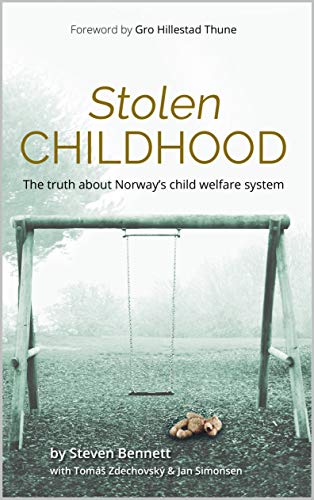




 Wings of the Wind
Natalya Shutakova, Another Mother Tormented by the Norwegian “Child Welfare Services” (Barnevernet)
September 20, 2020(It is June of 2021. I have checked Mr. Metaxas’s You Tube and this video was taken down. If anyone knows where it is, please let me know.)
September 20, 2020
Back in May, Natalya Shutakova was interviewed by well-known American author, Erik Metaxas. Four months later Natalya and her husband are still waiting for the return of their children who were taken from them by the Norwegian “Child Welfare Services” (Barnevernet) for no good reason whatsoever.
This request appeared on Natalya’s Facebook page on Sept. 6th:
“Urgent prayer request. Dear friends and family many of you know our fight to get our children back is still on. This week Monday to Friday we ask you to lift up prayers as we go into yet another court. Blessings to all.”
It seems that the latest court decision will be made in a few weeks. The results of that court decision will be noted here as soon as it is made public.
Natalya’s children are American citizens. Like Eric Metaxas, I am shocked and angered at this kind of intrusion into family life in Norway.
Please pray that these children are returned to their loving parents soon.
Chris Reimers
Share this: